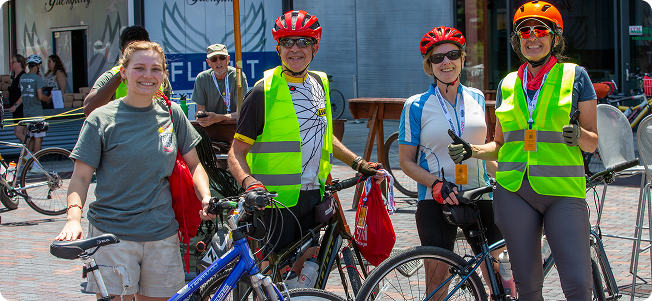
Without hesitation, the five points shared below should be extended beyond young people’s physical capabilities or academic performance. It challenges the notion that young people’s opinions are not worth consideration and that inclusivity along with many other benefits are lost when not properly engaging youth voices.
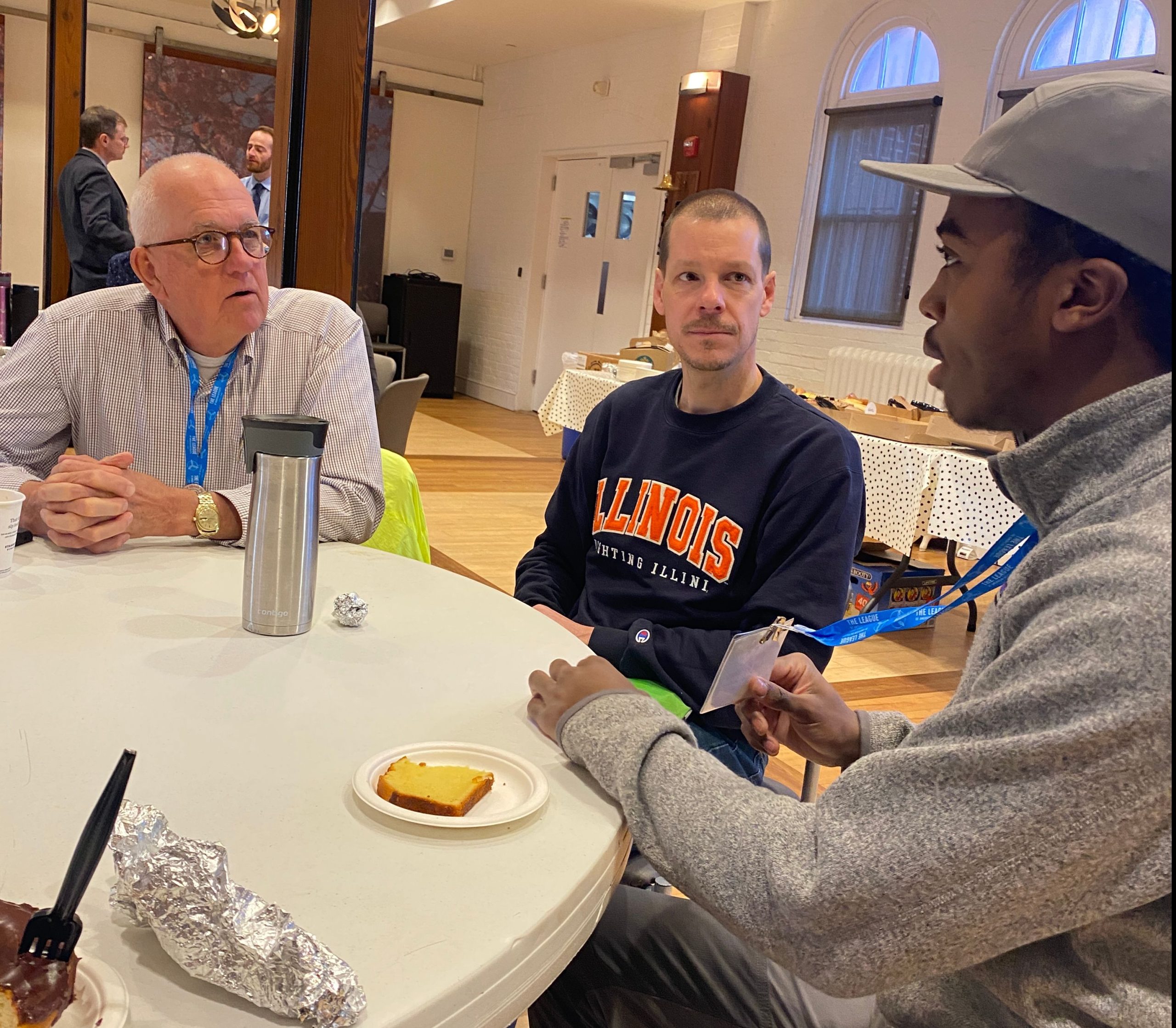
Recently, mayors and their staff were joined by Joshua from the National Youth Bike Council, Jacob Smith from National Organization for Youth Safety, Alison Collard de Beaufort with Vision Zero Youth Council, and Grace & Javier, both in 8th grade from the FCCLA to talk about several ways in which different initiatives across the US create meaningful engagement for young people.
These leaders took out some time to challenge their status quo and to learn a new perspective from young transportation advocates. What this teaches beyond transportation advocacy is that motivated young adults, when given the space and place to speak, will take it.
This event, hosted by the National League of Cities, enabled them to create an article called “Five Ways to Engage Youth in Road Safety Initiatives”, where the five ways derived from directly engaging young people. It’s fantastic to see articles created from this method of engagement, making an example of what working towards a more inclusive and collaborative future looks like.
Conversations that are yet to be had can start with these five points and serve as a great first step to uplifting the next generation. The points are as follows:
Meet with your local youth elected officials and organizations
Bring youth voices into Vision Zero and road safety initiatives
Host a day of youth and community education and action
Work with your local hospital to understand how many young people are involved in vehicle-related accidents in your community and find your high injury network (HIN)
Conduct a road safety audit near the schools in your city
Even though all of these do require their own episode, we will focus on the one that is the lowest hanging fruit. That is point number one, being the least local leaders and transportation members can help achieve. Here is a snippet from point number one, “meet with your local youth elected officials and organizations. Many municipalities have youth seats on their city council, committees and boards. Also seek out chapters of youth-led organizations like the National Organization for Youth Safety, the National Youth Bike Council, the Vision Zero Youth Council and FCCLA. Many middle and high schools have divisions of the National Honor Society, a volunteer organization of students dedicated to giving back.”
Simply put, if young people did not want to speak, they would not speak, but here we are speaking up. Additionally, including young people’s novel opinions, their capacity for driving change, and unique ways of thinking naturally fosters policies that create a more equitable and inclusive world for all ages.
This point was brought up by multiple groups during the conversation and is a note we gladly harper on as a basis for our youth leadership. We have to be willing to try and fail. Rather than to worry about our fear of not knowing, we’ll figure it out. It should not be uncommon for city leaders to ask or be asked about ways in which they are supporting the next generation by amplifying their voices and ensuring their active participation in decision-making.
As the lowest hanging fruit in the path to progress, engaging with local youth leaders and organizations can be a significant step towards building more inclusive and equitable communities. Unlike it may seem, even this step reaps great rewards and strengthens social fabrics by example and youth participation.
Here is a link to the full article. If you would like to support the creation of more articles like this, follow us to support our work.