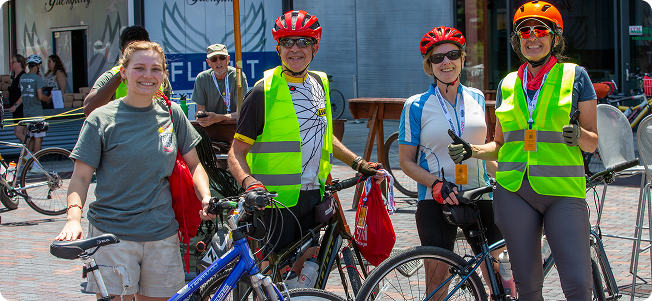
Student At Brandeis University Plans The Next Bicycle Library

Author: Council Members Zoe & Joshua

Highlight: Student At Brandeis University Plans The Next Bicycle Library

For some rejection is redirection. For Allan F., a soon-to-be senior at Brandeis University, it’s all about staying motivated through rejection. Fueled by passion and determination, Allan has always dreamed of participating in a more bicycle-friendly community. His desire stemmed from simply riding a bicycle when he was much younger, a hobby that followed him all the way to college at Brandeis University, a college located not too far from Boston Massachusetts.

The opportunity to make a difference came after Allan’s freshman year when he learned about DeisBikes through other students, a now-defunct bike-share program at Brandeis that once ran 15 years prior to 2024. DeisBikes allowed students to “check out” bicycles like library books and return them after a set time. Seeing this as his way to create a more bicycle-friendly campus, Allan planned to revive the program to create a campus where students could easily commute, explore local trails, and embrace a more sustainable lifestyle.


Highlight: A Library Of Bicycles

Unfortunately, DeisBikes had been discontinued when its founding members graduated, leaving no structure for continuity. Allan had a reputation for being the “the guy who bikes,” so he quickly found a way to get in contact with the founders of DeisBikes to understand their challenges. Their insights pointed to a critical issue: sustainability. This was an opportunity for the school and Allan to renew the program and increase student and faculty biking overall.
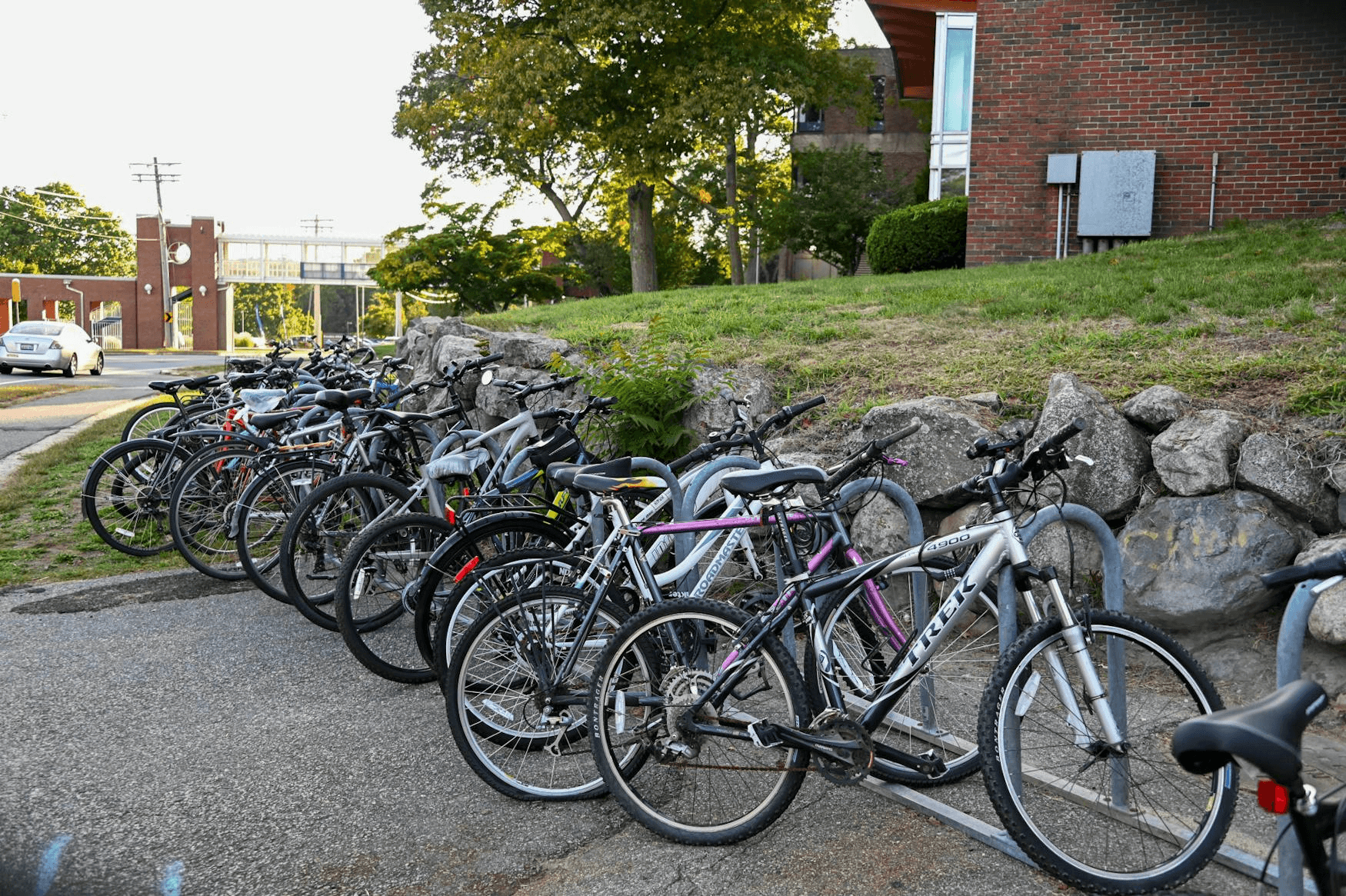
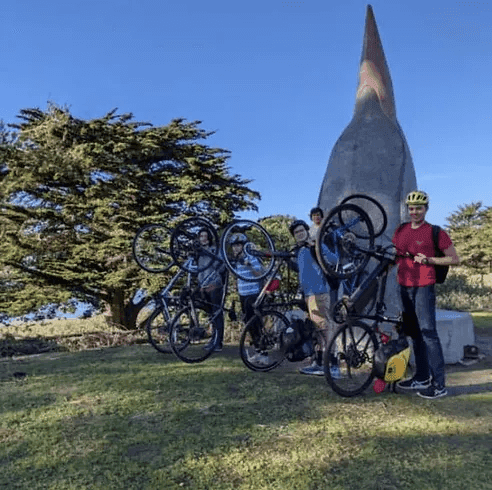
Bicycles at Brandeis – Photo credit of Lin Lin Hutchinson from The Justice

Bicycle Library Challenges For Brandeis

The biggest hurdle for Allan was figuring out how to structure a program that wouldn’t collapse when students graduated. This was fate of DeisBikes, which had 4 super dedicated students back in the day. Adding to the challenge, Brandeis’s sustainability office was defunded last year, leaving Allan without institutional support.

During his junior year, Allan surveyed 300 of Brandeis’s 5,000 students. The results were overwhelmingly positive: 91% of respondents supported a bike-share, with 51% saying they’d use it daily. The survey energized Allan, who began envisioning a team of students from multiple class years to ensure long-term commitment.

Another motivator for Allan is Mo, a Brandeis alum, who has done very similar work on campus before involving sustainability innovations. Mo Re Kim ’24 has been instrumental in helping Allan think through the structure of the program and provide previous Brandeis knowledge for future conversations with its Department of Transportation.

With the newfound momentum Allan submitted a proposal to the university, encouraging the use of a Bike share, bicycle library project: Brandeis Bikes. After much discussion and a bit of waiting, the university rejected the proposal.

Setting A New Vision For DeisBikes

Allan admits the rejection was tough but says it provided clarity. “It showed me where the gaps were and how to strengthen the proposal,” he explains. Feedback from the university highlighted the need for him to have specific storage solutions for the bikes and designated roles for short-term and long-term program management. It will also consider a new location for the bicycle system, “by the gym [instead of] the library” he mentioned.
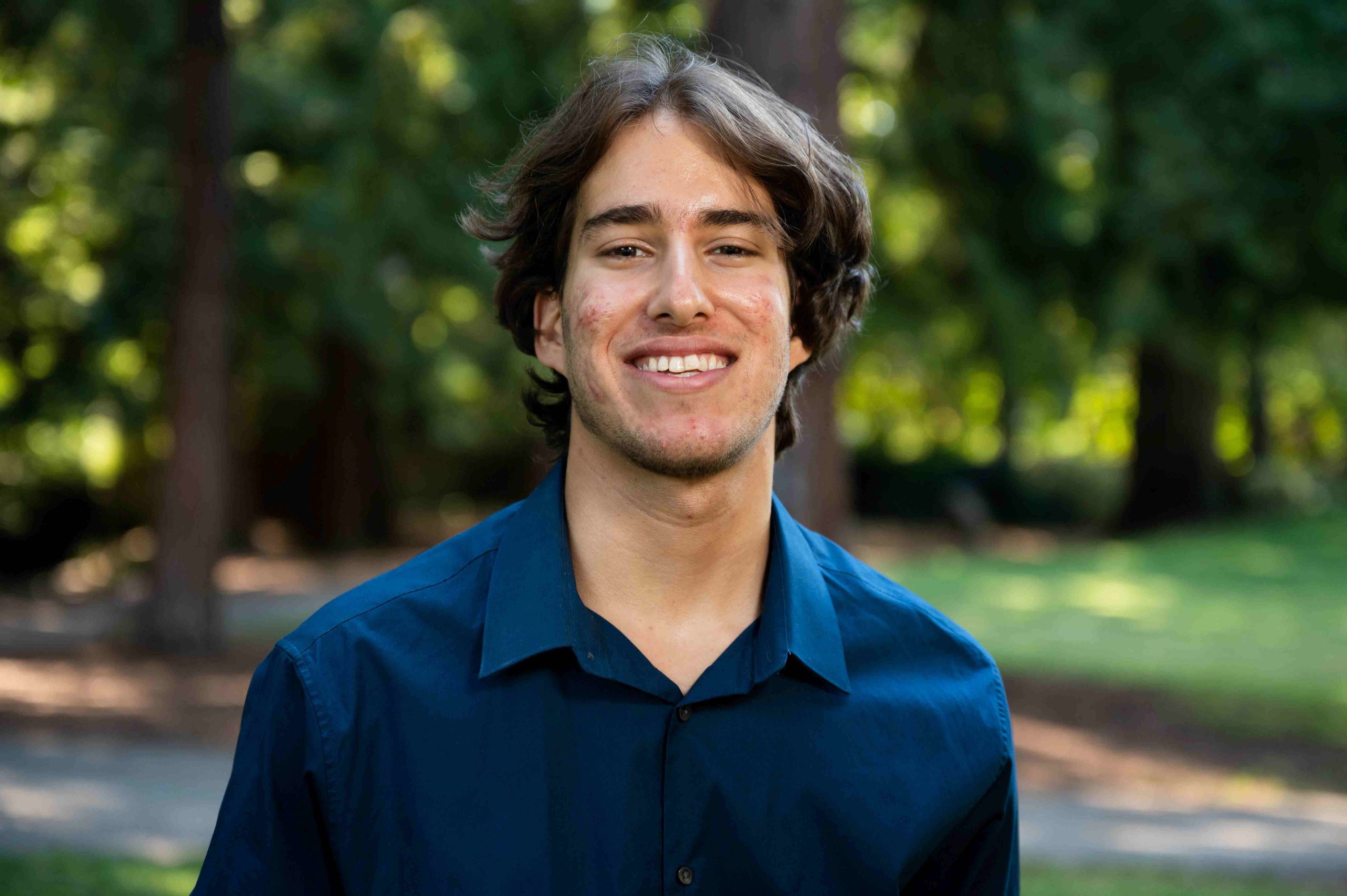
Allan, a Brandeis student

Drawing further inspiration from other bike-share programs such as Tufts Bikes in Tufts University located near Boston, he hopes to see convenient bike racks at every building, a convenient technical way to checkout bicycles, and campus maps highlighting the best bike routes.

Allan has learned that to create change, it requires collaboration, bringing people together and not having them work alone. “This is just a small obstacle we’ll overcome,” Allan says confidently while also giving thanks “to the continual support of MassBike and the Bike Together Waltham community”. With the second semester ahead, he’s committed to making the Bicycle Library a reality at Brandeis. Allan is calling on his fellow students to help with getting the word out, map-making, and maintenance. Allan can be reached at alfeldman@brandeis.edu.
My Times In Chile Point Out Flaws In Our U.S. System

Author: Council Member Nora

Hello! This is Nora from the National Youth Bike Council team writing to you from Santiago, Chile! While the US is entering spring here on the other half of the world it’s getting colder and colder as we enter fall which is taking some time for my mind to understand.

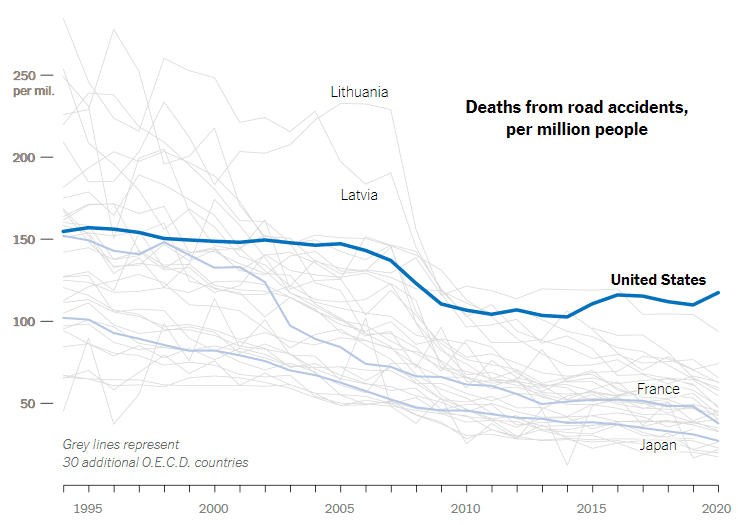
I am currently studying abroad and among many things I have learned in my time away from the US is that our relationship with cars and bicycles seems to differ from the rest of the world. According to a report by the New York Times, “In 2020, as car travel plummeted around the world, traffic fatalities broadly fell as well. But in the U.S., the opposite happened. Travel declined, and deaths still went up.”

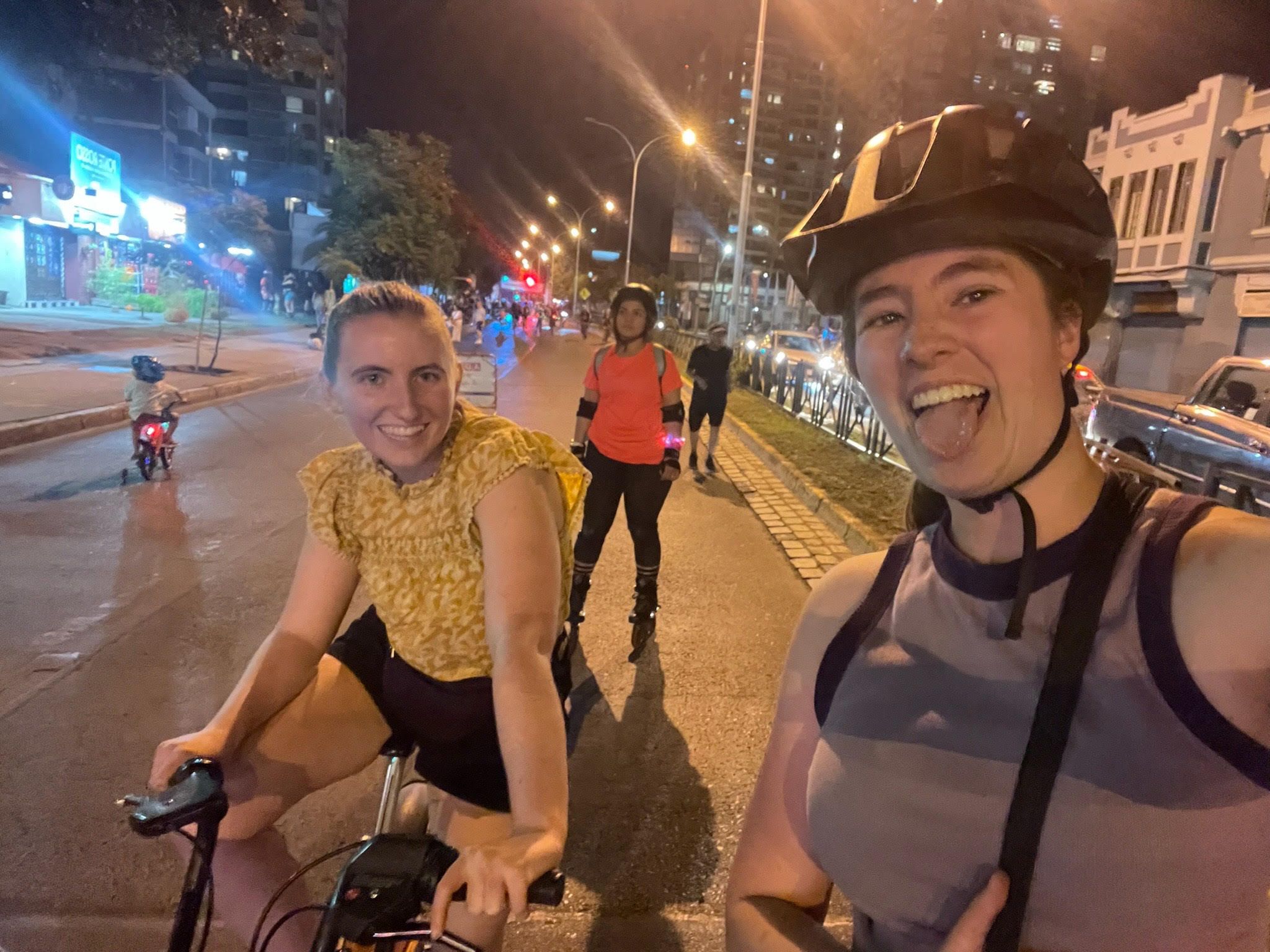
This report surprised me because I don’t believe Chileans are more accustomed or more respectful towards bikers. There are plenty of gaps in Santiago’s biking infrastructure, but one approach I found interesting that Santiago is doing is that every Sunday major streets are closed to cars and bikers, runners, scooters, and anything without an engine take over. It doesn’t happen all day but it is a good chunk of the day and a great way to feel safe and comfortable on the bike while getting to know the city in a different way.

I also got to participate in a night ride, which had the same set up of street closures but everyone was lit up with lights, there were concerts in parks along the route, and families were out together. I felt like I could safely bike around while also getting to know the community.

Now as to why the US is such an outlier in the world we don’t really know but there are a lot of possible reasons. One is that, as Jennifer Homendy, chair of the National Transportation Safety Board said, “Motor vehicles are first, highways are first, and everything else is an afterthought.” I think for bikers this often manifests itself through a feeling like you are not welcomed or you should not be there often because there is no lane for you.

Other theories deal with the kinds of cars Americans drive: often bigger and automatic. Bigger cars mean slower breaking and that pedestrians are hit at a higher point than the legs. Automatic cars means that drivers don’t have to use two hands whereas a stick shift requires a lot more of a driver’s attention, with less attention required in automatic cars drivers are more likely to become distracted by a phone or messing with the radio. Modern cars are also coming with more technology which means more buttons and screens and dials to distract drivers.

“A livable community is one that provides safe and convenient transportation choices to all citizens, whether it’s by walking, bicycling, transit, or driving.” Around the world and unfortunately increasingly in the US communities are not safe for pedestrians, “Each year, unfortunately, pedestrian and bicyclist fatalities comprise about 19 percent of all traffic fatalities with approximately 6,000 pedestrian deaths and 850 bicyclist deaths. Another 76,000 pedestrians and 47,000 bicyclists are injured in roadway crashes annually.”

For me this is a reminder of why we do the work we do at the National Youth Bike Council. Why we need to take perspective from not just the loudest but also the youngest of all pedestrians, because the problem is getting worse. Even a pandemic which significantly decreased the amount of cars on the road did not decrease pedestrian deaths, which means our infrastructure is falling short.

There are many theories why pedestrian deaths are increasing but there are also many ways we can try and change that. From a personal level this can look like reaching out to your local government about places where you see gaps in pedestrian infrastructure. At a community level we can look at Santiago, starting out by handing over streets to pedestrians once a week. At a national level you can join our volunteers or volunteer for organizations like Vision Zero where we either give resources or help organize initiatives that teach a specific set of pedestrians how to avoid common mistakes drivers make. We work to change the fact that the US is an outlier in the world of pedestrian fatalities. So as Bike Month is coming up I hope we can take some time to learn about the problem (or problems)and the solutions. See you next month!

If you want to learn more about how lower income communities are disproportionately affected check out Smart Growth America. Or additional resources.

For more theories including people moving to the Sun Belt check out the Daily Podcast from the New York Times.

Rising Pedestrian Deaths Are Not Evenly Distributed

Author: Council Member Nora

Happy New Year to all! This is your blogging council member, Nora, here to kick off 2024 with you. For our resolution, we’ve decided to slightly change our approach to these blogs by including, along with what the Council is doing, more in depth investigations into topics that youth in transportation are interested in.

There is a growing recognition that pedestrian deaths are and will continue to rise every year and that the US is outpacing other countries in pedestrian deaths. While these statistics are not good, greater awareness about the problem and showing that other countries are dealing with pedestrian safety in more successful ways means there is even more pressure on US governments on all levels to make an effort to change our car focused mentality.

Hearing about this increased recognition of the US’s pedestrian safety problem gave me a moment of ‘yes! Thank you for seeing what is happening!!’ As I was celebrating this small step towards progress, a friend called to my attention a problem in pedestrian safety I had not been seeing. So in this blog, I want to highlight a growing group of those pedestrian fatalities that are often forgotten – those without permanent residence.

Those who are experiencing homelessness are a vulnerable community to start off in terms of impact. However, they are particularly vulnerable to traffic fatalities as they are more likely to be living next to roads and high traffic areas such as highway interchanges and major road underpasses (2 – Why Are So Many More Pedestrians Dying in the US?). High-speed corridors, even with the danger they present, offer a particular refuge because the land next to highways is public land. Underpasses and bridges offer protection from weather and the relatively remote location as well as the public land aspect means individuals are less likely to be told to leave by police or land owners. This means they are more likely to be near cars at night, which is when most pedestrian deaths are occuring. There are many other factors that make this community more vulnerable to pedestrian fatalities including not being able to use other modes of transportation including cars and buses due to costs (4 – Homeless More Vulnerable To Pedestrian Accidents). These factors depend on the individual and their situation but in general if you are experiencing homelessness you are more likely than a housed person to die as a pedestrian in a traffic related incident.

Los Angeles has found that those experiencing homelessness are 53 times more likely to be killed in traffic violence than the national average. According to the Portland Bureau of Transportation, in 2021 “seventy percent (or 19 out of 27) of pedestrian deaths were houseless community members; and 33 percent (21 out of 63) of all traffic deaths were houseless community members.” (3 – Traffic Crash Report 2021) These statistics are talking about Portland, Oregon in particular but nation-wide there has been an increase in people experiencing homelessness pedestrian deaths. Across the nation those experiencing homelessness make up between 60% (in Colorado Springs) to 15-20% (San Francisco) of traffic deaths (1- Living Without Refuge).

When the problem is laid out in front of you it’s clear why those who are experiencing homelessness are more vulnerable to cars, so why do we often forget to include this community in our talks towards a safer transportation environment? While advocating for young people specifically, we empathize with this group of overlooked pedestrians, because we know what it feels like to be a part of an overlooked group of road users. One of the reasons, I think, is that most cities/counties/states don’t monitor whether someone was experiencing homelessness and so the data is not collected. This makes it hard to understand the size of this national problem.

However, some cities are starting to include this data into their reports. 2021 was Portland’s first year of including homelessness into their pedestrian fatality report. They went from 70% of pedestrian fatalities were people experiencing homelessness in 2021 to 36% in 2022. When we acknowledge the problem, as the US is starting to do with general pedestrian safety, we can make changes to achieve solutions. To do this we can’t forget about communities, in order to achieve Vision Zero (where there are no pedestrian fatalities) we need to see how everyone is impacted.

If you’re interested in learning more, check out the below resources on this topic:

1 – Usa.streetsblog.org Living Without Refuge
2 – Why Are So Many More Pedestrians Dying in the US?
3 – Portland.gov Traffic Crash Report 2021
4 – 13wmaz.com Homeless More Vulnerable To Pedestrian Accidents

What Did We Learn From Council Chatcasts this year

Author: Council Member Nora

We have come to the end of 2023! This year was certainly an adventure for me as I am sure it was for everyone. One of the new opportunities for me in 2023 that I am thankful for is that I got to start writing the National Youth Bike Council’s blogs! And as we reflect on this year I wanted to do some reflecting on what the National Youth Bike Council has done.

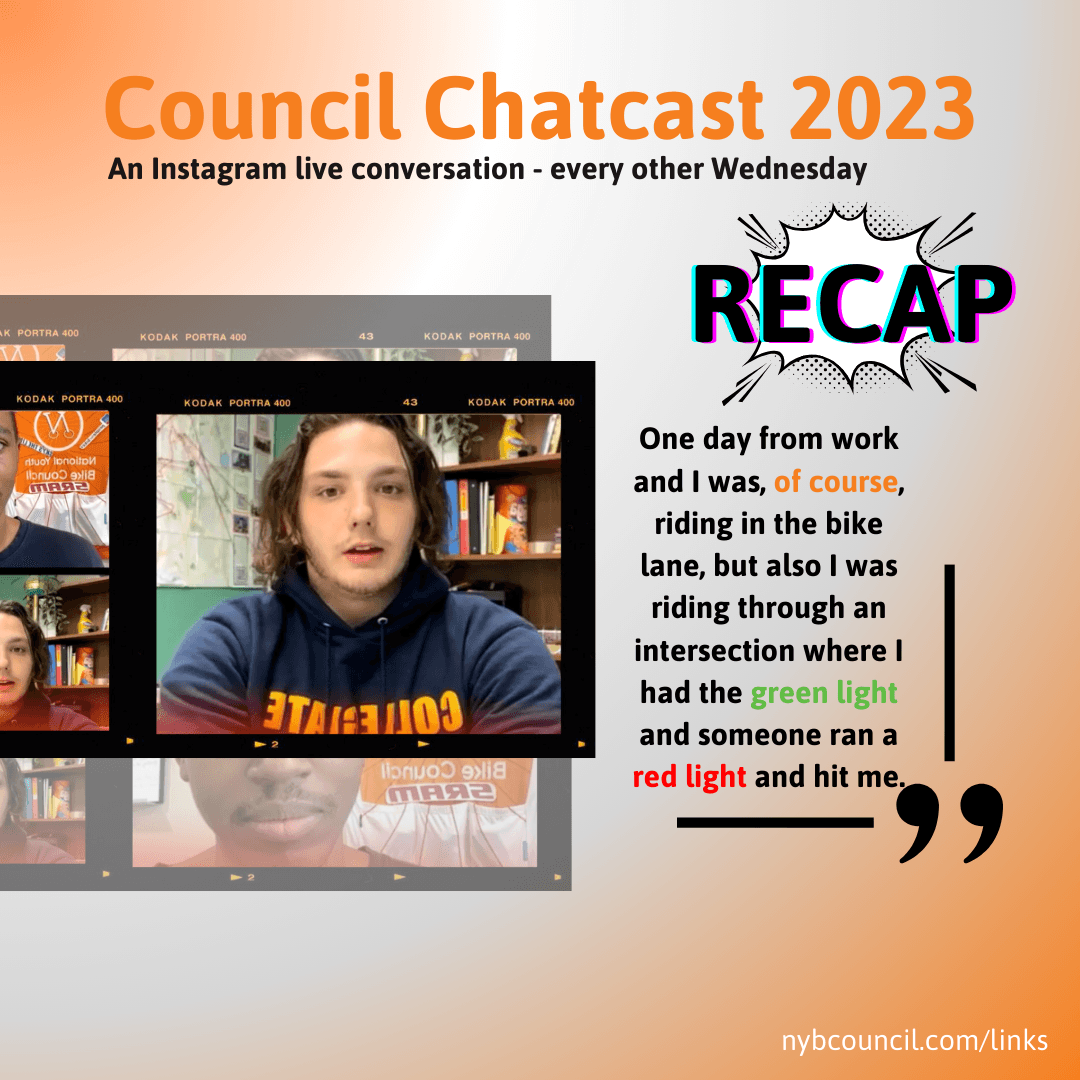
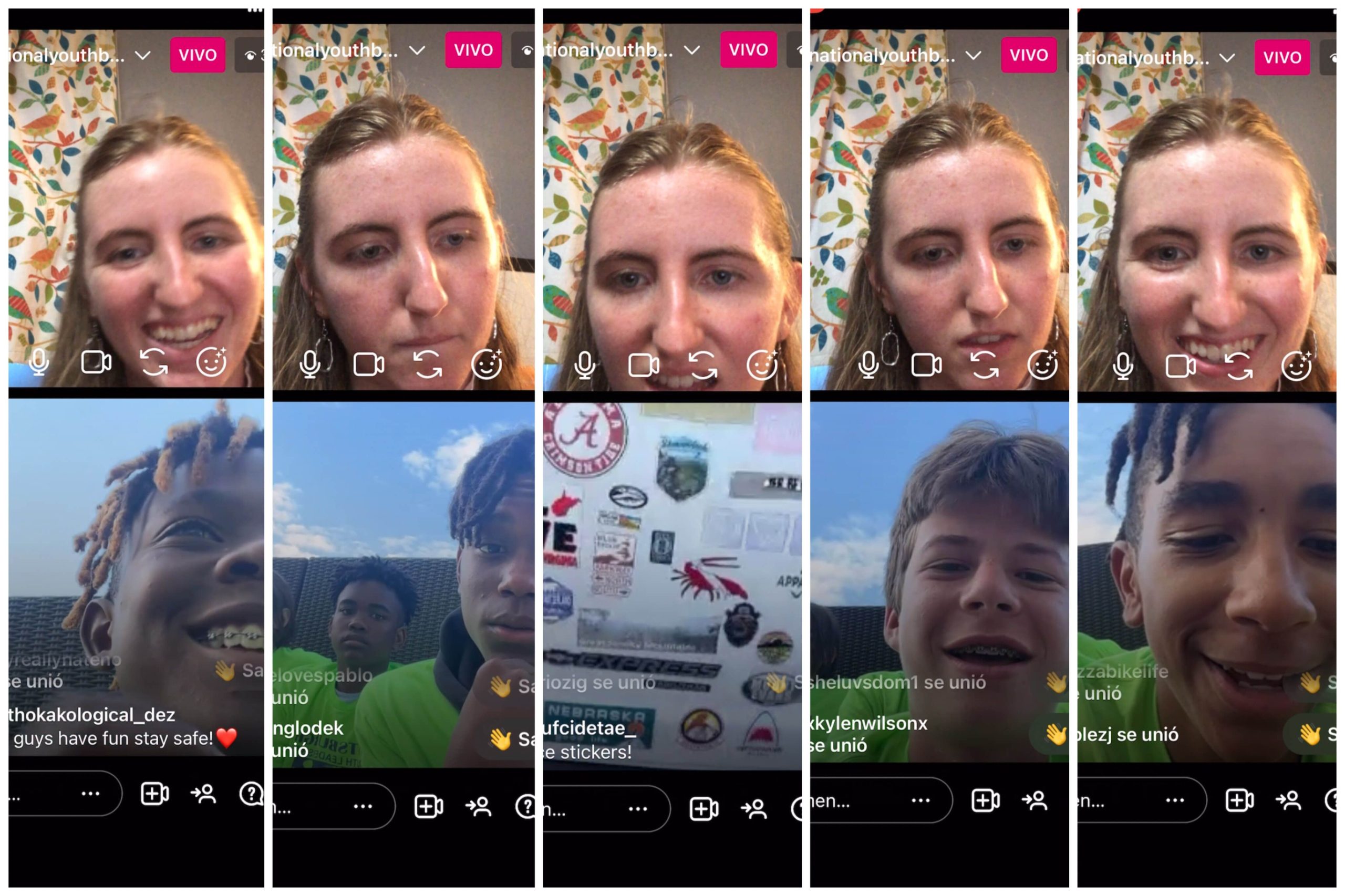
In this blog I will be reflecting on the 11 Council Chatcasts that we have done. These were Instagram live conversations between members of the Council and youth involved in different forms of transportation from across the US (Pennsylvania, California, Nevada, Florida, Massachusetts, Maryland, & New York ) and many cities in between. These conversations were able to highlight the experiences of youth across the United States in a range of types of biking, from mountain biking to road biking and the lessons they have learned. One of our lovely Advisor volunteers helped us transcribe the 11 Chatcasts and summarize common themes as well as individual messages from each interview.

I want to first look at the common opinions that were found. One of the themes I thought was particularly interesting is that some of the chatcast participants rely on biking and public transportation because they don’t have a driver’s license. I definitely identify with this. Before I could get my driver’s license I biked to school, because I often had to stay after school for clubs or sports which meant I missed the bus back home. The bike became essential to my independence! Now that I am at college, a lack of a car has led me again to rely on biking, walking, and public transportation.

When you rely on public transportation and biking the shortcomings of the infrastructure become even more apparent. As the Chatcast points out, across the US there is a need for more bike lanes especially near schools and a safer infrastructure for cyclists in urban environments. The Chatcasts point out that the lack of biking infrastructure comes because, as one participant put it, “we live in a country that is dominated by car culture.” I think it’s interesting to see how the experience changes across different parts of the US. One participant, Josh M, talked about their experience growing up in Texas. “Where biking is completely untenable” and “then I moved to New York at the age of 18 and I am now, suddenly flourishing in a world of public transit, buses, and an NYC bike share system.” There are more pedestrian deaths in the South than in the North. Generally in the South of the US cities were built around the automobile where in the North cities are older than the car and were built around pedestrians.

Council Chatcast youth also point out the importance of knowing safe and efficient bike routes when it comes to the logistics of commuting and that we need to make information about routes and education on urban cycling more accessible. Your whole biking experience can change based on which route you take. Josh M said, “You feel silly when you’re on a bicycle trying to cross, you know a six-lane highway underneath, it just feels like you’re about to die all the time.” Without proper infrastructure people are disincentivized to bike because it can feel dangerous and unwelcoming. The exciting part about the Council Chatcast is not only does it elevate the concerns of our peers but also the suggestive solutions as well. Interview 1 “I was gonna say bike packing is accessible, but it kind of isn’t because you need a lot of supplies to make it happen: camping gear, you need bags for your bikes, you need supplies, you need a sleeping bag, dicky sack, sleeping mat, and knowledge about biking or about where to camp or the weather. So that’s the main point of Youth Bike America is that we can make it accessible to people.” Said Dasha, a young commuter who uses bicycling and walking as her main form of commuting and is also leading Youth Bike America.

In addition to how infrastructure and access across the US is lacking and how we can solve it, there is so much that our Council Chatcasts voiced this year that I can’t fit into one blog. Our Council Chatcast participants highlighted including making biking communities more inclusive, biking more accessible, e-bikes, how we design cities, a possible biking utopia, how to engage youth, and more. Interview 6, “I don’t think I’ve heard anyone say flying bikes, but now that you said it, I can totally see that happening. They have to make it happen one day.” I plan to tell you more about their ideas, how our advocacy will play a part, and reveal more youth-thinking in 2024. See you then!

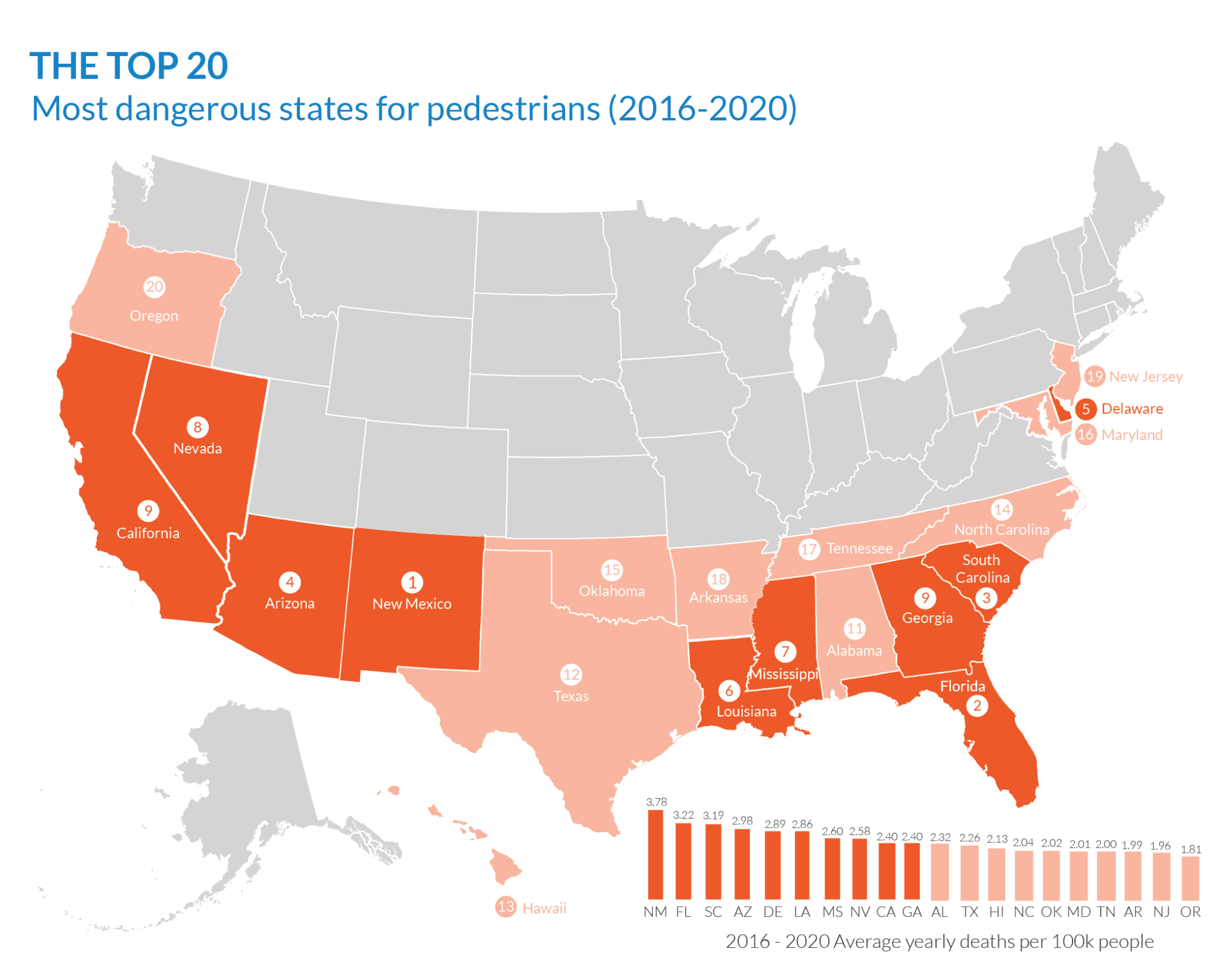
Brian, California is number 9 on the Top 20 pedestrian deaths for 2020 (actually tied with Georgia) do you feel that your experience supports that ranking? What are some trips you did in 2023?

How To Engage High Schoolers

Author: Council Member Nora

Hello and Happy Thanksgiving! Now we start our progression to the end of the year and with that we get to recount and reflect on all that we are grateful for! Since I am abroad this year in Northern Ireland, I was in charge of cooking the turkey for our Friendsgiving.

One of the opportunities I am grateful for this year was to be able to participate in the Safe Routes to School Summit. During our panel session facilitated by the National Center for Safe Routes to School I talked alongside three other panelists about how to get high schoolers involved in pedestrian advocacy and to ensure they remain involved after high school. Michele Walker, who works at TransForm and is in charge of the Alameda County Safe Routes to Schools high school program, brought her experience as an adult working with high schoolers and tips on how she got high schoolers interested. She emphasized the fact that getting involved in pedestrian advocacy can look like many things as we have talked about in previous blogs. For example, Michele talked about how she had gotten youth interested in transportation through community garden projects and beautification.

Cydney Thompson, a high schooler who is interning at the Civic Design Center, discussed the importance of milestones in order to keep students interested and to recognize their achievements. I think this is especially key in the transportation field where projects can take years to achieve. Working to get approval from the city or school administrations can be extremely frustrating and the bureaucracy can easily discourage advocates from pursuing projects. It can be even more discouraging when you’re working in the timeframe of four years. Some of the projects I worked on in high school I knew would not be completed before I graduated because the planned end date was 10 years. However, this is where organizations can help by keeping a continuity as students graduate and new students join. They can support by making sure projects continue to be worked on and can explain why these projects were started.

Jacob Smith, who started working in transportation in high school and has continued working in transportation as an adult at National Organizations for Youth Safety and National Center for Safe Routes to School’s Vision Zero for Youth, talked about how youth are the “Architects of Change.” Jacob focused on how youth are the ones who will be dealing with the effects of not improving the transportation infrastructure in the future, so it’s important to include them in the conversation because we are the ones who will be impacted by the decisions made today. As discussed, transportation advocacy is an especially long term change whether we are talking about the impact on the environment, health, equity, etc. The way our roads, sidewalks, bike lanes are laid out affect how we move about in life and therefore the effect of small problems can be exacerbated as well as small solutions can have compounding benefits.

Our panel was meant to support Safe Routes to School programs as they transition from focusing on elementary and middle schoolers to including high schoolers. While high schoolers can appear to be more difficult to reach out to, in reality, they are actively seeking opportunities to discover their identity and explore new interests to understand who they are and where they fit in the world. Teens often gravitate toward activities and experiences that resonate with their evolving sense of self and aspirations and Transportation advocacy has a lot of interesting aspects for us. For example, feeling and being an integral part of the conversation on transportation for all the reasons we discussed and more. Youth know about and are close to issues on the ground, they also have the will to make a change. Where organizations like the National Center for Safe Routes to School and the National Youth Bike Council come in is connecting youth to resources and tools in order to empower their voices.

Brian, why do you think it’s important for organizations such as Safe Routes to School to focus on connecting with high schoolers along with elementary and middle schoolers? What are some transportation activities you are thankful for participating in this year?

Walker Safety Means More Than You Think

Author: Council Member Nora

Hiya! This is Nora, back with your October blog writing to you from Northern Ireland. While studying abroad I have gotten to learn so much about the world and other cultures. One night this month I was talking with my roommates and one of them asked me “what is a pedestrian advocate?” I realized that even though I identify what I do as pedestrian advocacy, I’ve never defined it outright. So that’s what I am dedicating this month’s blog to: what I mean by pedestrian advocacy!

I started using the term pedestrian advocate not for any real reason except that it made a nice acronym. I was a part of a club in high school that was formerly known as the Grady Pedestrian Safety Coalition, but when our school changed its name from Henry W. Grady high school we needed to change our club’s name. We came up with the Atlanta Students Advocating for Pedestrians or ASAP for short. From there we started identifying ourselves as pedestrian advocates.

Since our club was composed of students who walked, biked, skated, took public transportation, and drove and because we wanted to advocate on behalf of everyone. We are all pedestrians. So pedestrian advocacy relates to working to make the transportation environment outside of a car safer, pleasant, and more attractive to commuters. First and foremost we are trying to prevent deaths through initiatives such as the ghost bike project that we talked about in a previous blog or Vision Zero (working to achieve 0 traffic-related fatalities). We are also making sure that you are not having to walk next to four lanes of traffic or share the lane with cars who are going 50 mph. We also actively promote using alternatives to cars in your commutes.

Just like the people we advocate for, what we advocate and how we advocate also includes a lot more than those three missions. Transportation touches so many other fields such as environmental, equity, and health. Therefore when I say I am a pedestrian advocate I am advocating for the whole pedestrian. I advocate to ensure that schools in all income levels are safe for pedestrians. I advocate to promote better public transportation infrastructure to lower emissions and offer more affordable commuting options.

So what I mean when I say I am a pedestrian advocate is that I advocate for the safety of commuters. Safety of commuters in transportation includes a whole range of issues, which is why ASAP was advertised as an advocacy club for whatever you were passionate about.

How do you identify your advocacy? Do you define pedestrian advocacy another way? How do you explain your work in transportation to people who don’t work in this field? I’ll be waiting for your comments on Twitter, Instagram, or email (info@nybcouncil.com)!

5 Steps Leaders Are Taking To Enhance Youth Voice

Without hesitation, the five points shared below should be extended beyond young people’s physical capabilities or academic performance. It challenges the notion that young people’s opinions are not worth consideration and that inclusivity along with many other benefits are lost when not properly engaging youth voices.

Recently, mayors and their staff were joined by Joshua from the National Youth Bike Council, Jacob Smith from National Organization for Youth Safety, Alison Collard de Beaufort with Vision Zero Youth Council, and Grace & Javier, both in 8th grade from the FCCLA to talk about several ways in which different initiatives across the US create meaningful engagement for young people.

These leaders took out some time to challenge their status quo and to learn a new perspective from young transportation advocates. What this teaches beyond transportation advocacy is that motivated young adults, when given the space and place to speak, will take it.

This event, hosted by the National League of Cities, enabled them to create an article called “Five Ways to Engage Youth in Road Safety Initiatives”, where the five ways derived from directly engaging young people. It’s fantastic to see articles created from this method of engagement, making an example of what working towards a more inclusive and collaborative future looks like.

Conversations that are yet to be had can start with these five points and serve as a great first step to uplifting the next generation. The points are as follows:

  1. Meet with your local youth elected officials and organizations
  2. Bring youth voices into Vision Zero and road safety initiatives
  3. Host a day of youth and community education and action
  4. Work with your local hospital to understand how many young people are involved in vehicle-related accidents in your community and find your high injury network (HIN)
  5. Conduct a road safety audit near the schools in your city

Even though all of these do require their own episode, we will focus on the one that is the lowest hanging fruit. That is point number one, being the least local leaders and transportation members can help achieve. Here is a snippet from point number one, “meet with your local youth elected officials and organizations. Many municipalities have youth seats on their city council, committees and boards. Also seek out chapters of youth-led organizations like the National Organization for Youth Safety, the National Youth Bike Council, the Vision Zero Youth Council and FCCLA. Many middle and high schools have divisions of the National Honor Society, a volunteer organization of students dedicated to giving back.”

Simply put, if young people did not want to speak, they would not speak, but here we are speaking up. Additionally, including young people’s novel opinions, their capacity for driving change, and unique ways of thinking naturally fosters policies that create a more equitable and inclusive world for all ages.

This point was brought up by multiple groups during the conversation and is a note we gladly harper on as a basis for our youth leadership. We have to be willing to try and fail. Rather than to worry about our fear of not knowing, we’ll figure it out. It should not be uncommon for city leaders to ask or be asked about ways in which they are supporting the next generation by amplifying their voices and ensuring their active participation in decision-making.

As the lowest hanging fruit in the path to progress, engaging with local youth leaders and organizations can be a significant step towards building more inclusive and equitable communities. Unlike it may seem, even this step reaps great rewards and strengthens social fabrics by example and youth participation.

Here is a link to the full article. If you would like to support the creation of more articles like this, follow us to support our work.

Even Ghost Bikes Have Lives

Author: Council Member Nora

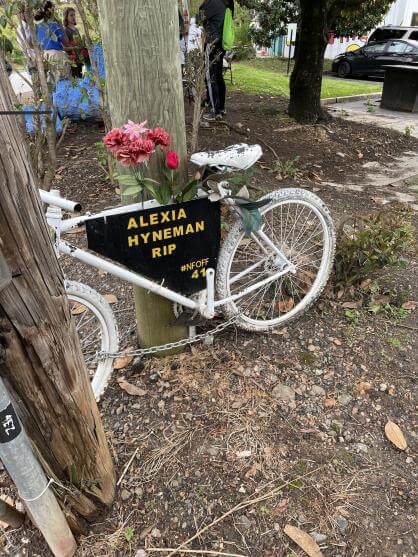
Wow, it is definitely a hot summer in July! I sympathize with the rest of you dealing with the heat, in Georgia it’s a wall whenever I go outside thanks to the humidity. I came to grips with that heat wall the other day while I was out biking on the Beltline (a terrific pedestrian-only path that runs all over the city of Atlanta). Though, on that trip what caught my attention was a white bike tied to a telephone pole at a crosswalk where the Beltline leads to Piedmont Park. I am familiar with this bike, it sits across from my high school. For a while I paid no attention to it, even when it was first placed there I didn’t really realize it until I learned what it meant.

This white bike is one of many Ghost Bikes. This Ghost Bike is for a student who in 2016 was struck by a car at this intersection and died on the way home from school. She was 3 years older than me.

A Ghost Bike serves as a memorial, to remind the world that a seemingly uninteresting corner completely changed someone’s life. They are usually a bike that is irreparable and unusable, so as not to take a bike off of the street. There are over 600 ghost bikes in the US, there are more than 250 ghost bikes in New York City alone. They can be found all over the world from Ukraine to Ecuador.

They are a reminder that we often view the pedestrian at fault, as was the case of my peer. They are a reminder that a fragile bike stands no chance against a car. They are a reminder that in only the first half of 2022 drivers in the United States struck and killed 3,434 people.

Ghost Bikes are a reminder of the work that needs to be done and the work that has been done. In my case, we testified and worked with the City Council to install a HAWK signal, a scramble (when all the cars have to stop for pedestrians to cross), and cameras to create a safer environment for not only the Beltline traffic but for the students going to and from school. Still in 2022 a student was hit by a car near the intersection, she went to the hospital and is ok now but it is a reminder that more work needs to be done. Shortly after during the 2022 Youth Bike Summit, I lead a group out to this crosswalk. We put flowers in front of Alexia’s white bike and discussed the intersection, and how the 4-lane thoroughfare meeting the 3-lane road was built for cars, not pedestrians. We discussed how we can change the intersection to focus on the pedestrian so that we can prevent any more accidents from happening. Now there are plans to fully rework the intersection by repaving the streets.

What has been insightful for me is that once I learned the story of ghost bikes I couldn’t stop seeing them. When you are aware of them you learn so much more about the design of transportation. So much is said in a white locked-up bike.

Have you seen any Ghost Bikes near you Brian? What has been your experience with Ghost Bikes?

49 States and 500+ Miles Later

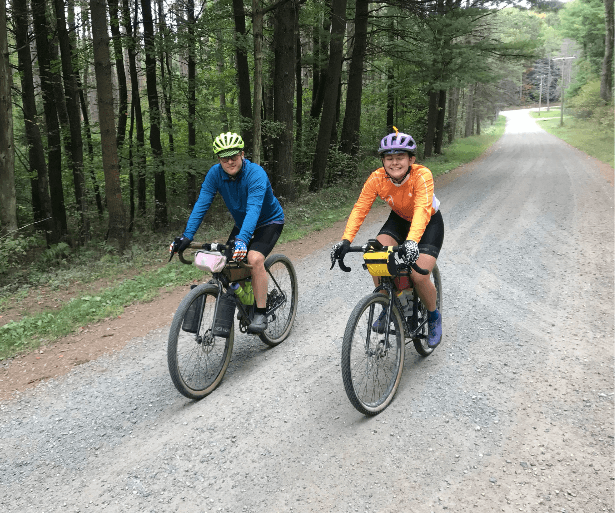
Happy June, I hope you are doing well and keeping cool during a hot summer! With Pride Month and the latest federal holiday, Juneteenth, June offers a time to celebrate and reflect on diversity within our communities. As we have discussed in previous blogs, biking has been historically dominated by white male bikers but there are organizations pushing to make biking more inclusive to all communities. Many of them, like NYBC, are youth-fueled. I had the opportunity to talk with one of those organizations, Pittsburgh Youth Leadership (PYL). Specifically, I talked to 8 riders who were currently on a 500-mile trip from Queensbury, NY to the Basketball Hall of Fame in Massachusetts. Almost all of them were young, black, and from lower economic means and were not attempting long-distance bike trips before PYL. Yet, they had just finished their 6th day and had already done around 220 miles.

PYL is a nonprofit organization that gives inner-city, low-income, at-risk youth access to biking through all-expenses-paid bike rides across the country – we’re talking about hundreds of miles. They have also been to 49 states, with Hawaii being the exception and they have proof. John Harris (this was his 4th trip with PYL) showed me the “home base” van that has a bumper sticker from every place PYL riders have been. So how did they do it?

Author: Council Member Nora

Morrell Rogers (2nd trip) described the intense training they do to learn bike safety techniques, how to pass correctly, change gears, and get a taste of long-distance riding. Usually, they are around 40 miles. Caleb Freich (5th trip) says that PYL definitely helps him get and stay in shape with Caiy Whim (1st trip) adding that the training rides increase your strength, endurance, and stamina by forcing everyone to face and surpass their limits.

Anthony “AJ” Evans (1st trip) heard about PYL from a school friend and, when he became old enough, was recommended by his school to join, all riders must maintain a 2.0 GPA. He and all the other riders said that what the PYL teaches you is not just physical ability but mental strength. As AJ put it, “You always find a way to push through, you have to persevere,” because once you get started you can’t turn around. Cenire Scott agreed, through PYL he learned that biking is a lot harder than you think, you can easily burn out if you haven’t trained hard enough, but he now knows how to persevere through the burn.

Landon Pickett (1st trip) told me that they ride on both trails and next to roads, rain or shine. Unfortunately this trip there was some rain on rocky terrain, making it the hardest day so far. Everyone seemed to doubt whether they or their bikes would make it through, but as Morrell told me thanks to the perseverance they have built up they were able to pass through.

This is just one of many trips that PYL offers this year with most riders planning to go on as many trips as possible. PYL really stands out to me because of how it is able to transform the idea of biking and include more people in the biking community. One thing they left me with was that you only need to go on one ride to totally reframe your mindset not just in terms of biking but in what your limits are and how you can surpass them.

As I learned from Morrell, Caiy, Caleb, AJ, Moneaz, Landon, Cenire, and John biking introduces you to a community that not only strengthens your physical health but also your respect for yourself and the world around you. I want to shout out PYL this month for doing so much to bring the world of biking to more people and to the PYL riders for persevering through! Good luck with the rest of your rides!

This has not been the only time we have spoken with young people from PYL, Joshua, another Council member, had the chance to bring Desmond, another PYL rider, on a Council Chatcast. Once again, during that conversation, Desmond mentions how being included has changed his life as he has traveled with PYL and experienced things through a new lens on a bicycle and over tons of miles!

The longest trip I have ever done was 250 miles and I cannot imagine doing any more than that. What about you Brian? What is the longest bike ride you have done? How does riding backward change the experience? How do you think we can get more people on bikes?

If you want to find out more about PYL check out their website here, if you are with an organization like PYL, consider hopping into the YB Hub!

May is Bike Month but it is also National Clean Air Month

Author: Council Member Nora

We are still in May but since it’s Bike Month, we decided to post two blogs to celebrate! This is your dutiful council member blogger, Nora, here to share the wonders of May with you. As a pedestrian advocate, I have learned that transportation touches so much more than just our roads and paths. By creating a more bikeable environment we improve health, provide more affordable means of transportation, improve the health of the environment, and so much more. Transportation, especially biking, has a positive impact on so many sectors of our lives. Today, I am going to talk about one of those sectors– decreased emissions, and we know we aren’t the only youth group to believe this.

May is Bike Month but it is also National Clean Air Month. Clean Air Month was started by the American Lung Association in 1972 as a week-long event and later initiated the enactment of The Clean Air Act, one of the first pieces of environmental protection legislation. This month allows for reflection on how we can improve air quality both indoors and outdoors. Now in DC as in other places another contributor to air quality is pollen especially during cherry blossom season. As someone who is from Georgia, pollen usually doesn’t phase me but the pollen in DC is on a whole different level. Although the flowers are very nice to look at. However, pollen is not a malicious emission but carbon is. Part of the focus of Clean Air Month is to reduce our carbon footprints and one of the ways you can celebrate both Clean Air Month and Bike Month is to bike to work because vehicles are the biggest air polluters.

Clean air is not just good for the environment, it’s good for all of our health, as poor air quality can contribute to cancer, bronchitis, allergies, and asthma. An easy way to see the effects of poor air quality is by looking at sunsets, heavy orange and red sunsets show that there are a lot of particles in the air either from fires, volcanoes, or pollution. These particles trap the light allowing for the longer wavelengths such as red and orange to show in the dusk sky. But every individual can do something about it! How are you participating in Clean Air Month, Brian? How do your sunsets on the West Coast look?

To see the air quality of where you live click here.