Hear youth on benefits of National Youth Bike Council

Celebrating Joshua’s Legacy, Embracing the Future

2025 marks the last year that Joshua is serving as the President of the National Youth Bike Council. Joshua served as
the National Youth Bike Council president since its inception in 2017. This transition happened a month after the 2025
Youth Bike Summit that took place in Boston between May 30-June 1st 2025. Attendees at the summit heard it first hand
from Council Member Pablo when the announcement was made on Sunday June 1st.

Welcoming Daniel C. as NYBC’s New President

Since June the transition has been underway. Today we have the exciting news that Daniel C. will be the new President of
the National Youth Bike Council. Leading the Council into its second generation of growth for youth leadership through
bicycling and fostering lifelong friendships between current and new Council members.

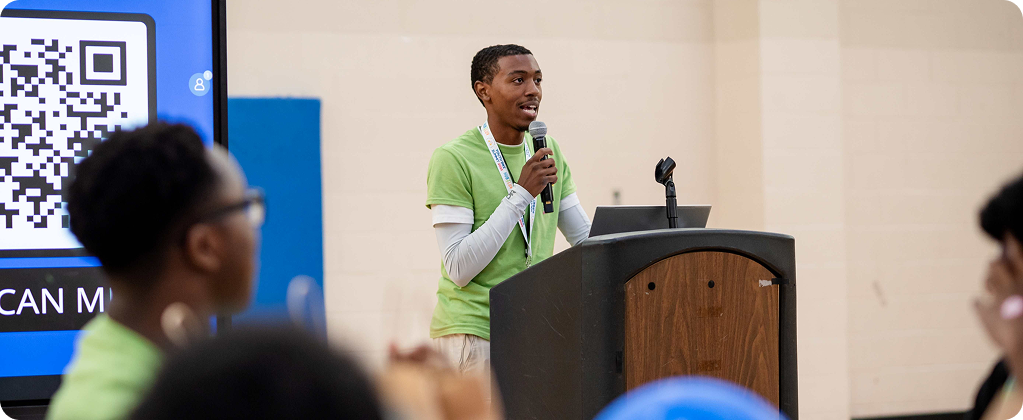
Joshua speaking at the Youth Bike Summit

Joshua speaking at the Youth Bike Summit

Joshua’s Tenure: Partnerships, Progress, and Purpose

During Joshua’s time serving the organization, the National Youth Bike Council discovered national level partnerships
with the recreation, healthcare, and education sectors. As President he also led the organizations through acquiring and
running the Youth Bike Summit from 2022 – 2025. We are very thankful for Joshua’s leadership in creating opportunities
for young leaders to learn, connect and grow through the initiatives of the National Youth Bike Council.

Joshua speaking at the Youth Bike Summit

Joshua is a continued board member of the organization and will be supporting as Board Chair and a Youth Bike Summit
Steering Committee member.

Are you listening? What have you heard?

Celebrating Joshua’s Legacy, Embracing the Future

2025 marks the last year that Joshua is serving as the President of the National Youth Bike Council. Joshua served as
the National Youth Bike Council president since its inception in 2017. This transition happened a month after the 2025
Youth Bike Summit that took place in Boston between May 30-June 1st 2025. Attendees at the summit heard it first hand
from Council Member Pablo when the announcement was made on Sunday June 1st.

Welcoming Daniel C. as NYBC’s New President

Since June the transition has been underway. Today we have the exciting news that Daniel C. will be the new President of
the National Youth Bike Council. Leading the Council into its second generation of growth for youth leadership through
bicycling and fostering lifelong friendships between current and new Council members.

Joshua speaking at the Youth Bike Summit

Joshua speaking at the Youth Bike Summit

Joshua’s Tenure: Partnerships, Progress, and Purpose

During Joshua’s time serving the organization, the National Youth Bike Council discovered national level partnerships
with the recreation, healthcare, and education sectors. As President he also led the organizations through acquiring and
running the Youth Bike Summit from 2022 – 2025. We are very thankful for Joshua’s leadership in creating opportunities
for young leaders to learn, connect and grow through the initiatives of the National Youth Bike Council.

Joshua speaking at the Youth Bike Summit

Joshua is a continued board member of the organization and will be supporting as Board Chair and a Youth Bike Summit
Steering Committee member.

More Questions About The Future Youth Bicycling

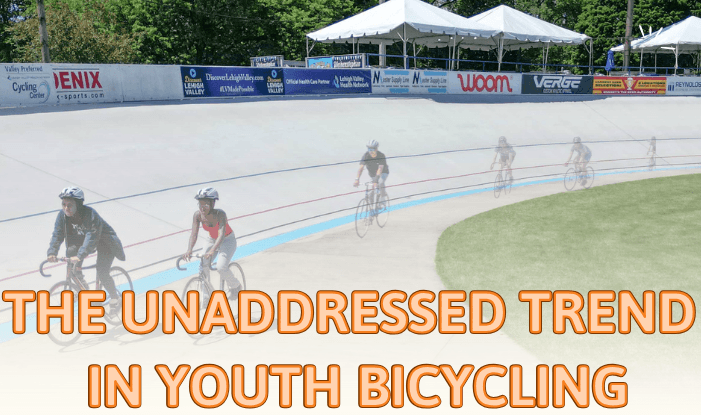
Creating a bicycling culture requires a fair share of effort. As an industry that generates over $8.4 billion annually, it’s clear the culture is worth the effort. However, when examining growth trends across different demographics—adults and youth—it becomes evident that the enthusiasm has not translated into increased participation among young adults and teens.

According to the National Sporting Goods Association (2024) and highlighted by Scott Fitzgerald of Pedal Kids USA at the National Bicycle Dealer Association’s 2024 Annual Summit, youth bicycle ridership has dropped to a generational low. In the early 2000s, 41% of 44 million children and teens (ages 7-17) participated in bicycling. Despite an increase in the youth population to 50 million, only 22% engaged in bicycling in 2024. This means that four out of every five children are without the essential cognitive, physical, and emotional benefits of bicycling. It also means that 4 out of 5 children are uneducated or misinformed on how to ride a bicycle in their city.

Photo provided by Scott Fitzgerald during the National Bicycle Dealer Associations Summit.

Is This Decline Going To Stop?

Is bicycling becoming outdated among younger generations? That’s the ultimate question. As youth ridership widely declines, critical questions arise:

Is becoming outdated an existential threat to the bicycling industry?
Have we seen meaningful growth in cycling participation, or does it feel stagnant?
When was the last time bicycling has modernized itself to align with modern day youth interests?
How do we encourage long-term youth engagement with bicycling?

Over the past decade, despite declining youth participation, there has been an increase in bicycle-related programs, initiatives, and federal funding. If investment in cycling programs is growing, why does youth ridership continue to fall? Are current programs effectively addressing the needs of young riders? Are they sufficient to reverse this decline?

Bicycle shops, like Scott’s, a part of the National Bicycle Dealers Association have been raising these concerns. Youth-bicycle programs across the U.S. are most commonly ask how to “tap into best practices from other organizers and increase resource sharing from other groups” or mention how their “biggest challenge is finding ways to speak to and involve youth in [their] events, advocacy, and education. We could use some help from the experts!”

The core issue is clear: how do we establish a sustainable framework that ensures long-term youth engagement with bicycling?

Photo provided by Scott Fitzgerald during the Youth-Bike Hub webinar: Modernizing How We Think About Youth Cycling

What Makes Youth Bicycling, Youth Bicycling?

Now more than ever, to address this crisis it requires a structured, sustainable approach to youth bicycling. Youth Bicycling is defined as participation with the bicycle of children, teens, and young adults up to age 24. Meaningful engagement begins early and should extend through key developmental stages—elementary school, middle school, high school, and college.

Creating a continuous pipeline of programmatic or spontaneous engagement fosters a cycle of participation, leadership, and mentorship at each stage. Other industries have demonstrated how structured youth involvement leads to long-term retention & volunteerism, career pathways, and leadership development. The cycling industry must adopt a similar approach to cultivate a lasting impact.

For this to be successful, a national alliance or governing body should guide and reward achievements toward long-term engagement. Without a centralized effort, programs will remain fragmented, limiting their potential for sustained impact.

What Makes Youth Bicycling, Youth Bicycling?

Now more than ever, to address this crisis it requires a structured, sustainable approach to youth bicycling. Youth Bicycling is defined as participation with the bicycle of children, teens, and young adults up to age 24. Meaningful engagement begins early and should extend through key developmental stages—elementary school, middle school, high school, and college.

Creating a continuous pipeline of programmatic or spontaneous engagement fosters a cycle of participation, leadership, and mentorship at each stage. Other industries have demonstrated how structured youth involvement leads to long-term retention & volunteerism, career pathways, and leadership development. The cycling industry must adopt a similar approach to cultivate a lasting impact.

For this to be successful, a national alliance or governing body should guide and reward achievements toward long-term engagement. Without a centralized effort, programs will remain fragmented, limiting their potential for sustained impact.

The Biggest Risks of Continued Decline?

If this trend is not addressed, both the cycling industry and public health will face significant consequences. The immediate and long-term effects include:

Within the Industry:

Fragmented messaging about bicycling’s role and who it serves
Inefficient allocation of corporate funds, leading to duplication rather than growing the cycling industry
Difficulty in accurately tracking youth ridership trends
Missed opportunities for collaborative, innovational programs as youth interests evolve
A constant need for corporate giving due to high youth turnover rather than youth-to-adult conversion

Beyond the Industry:

Limited accessibility for underserved communities, who are often reached last
A disjointed experience for young riders who must navigate different bicycling disciplines without clear guidance
Inability to establish a national alliance without industry-wide support
Lack of proactiveness leads to lack of say in how this long-term youth engagement is resolved and low ridership numbers are resolved
Missed opportunities to align with broader, current events: i.e. public health and sustainability initiatives
Bicycling risks becoming socially-outdated

A Future Without Young People Biking Does Not Have To Be Inevitable

A coordinated, long-term approach to youth cycling engagement is crucial to reversing this decline. It’s the task of the focused alliance to answer meaningful questions and create accurate metrics to track success. Key questions for industry leaders & alliances to answer include:

What concrete steps can be taken to ensure every child has the opportunity to experience cycling?
How can we redefine industry support for youth bicycling?

One critical and often overlooked strategy is youth leadership development. Programs that actively integrate youth into leadership roles—such as peer mentors, facilitators, and decision-makers—create an organic pathway for sustained engagement. Organizations that prioritize this approach have demonstrated higher retention rates and knowledge about organizational sustainability.

The Role Of The Youth Bike Summit

The National Youth Bike Council leads the Youth Bike Summit, a three-day annual event that brings together educators, program leaders, and youth advocates from across the U.S. to discuss concepts like this with their peers. By placing youth at the forefront—as speakers, decision-makers, and facilitators—the summit highlights the power of youth-driven initiatives.

Knowledge sharing and modernizing youth bicycling concepts is essential. Supporting initiatives like the Youth Bike Summit and ensuring that educators, community leaders, and organizations can attend is critical to creating a sustainable youth bicycle movement.

The Underdog To Combating Youth Mental Health: Bicycling

Author: Council Members Joshua

Unlike other physical activities such as running, walking, or playing soccer, bicycling offers unique versatility in addressing both physical and mental health challenges.

The youth mental health crisis in the U.S. has reached alarming levels. Data indicates a significant increase in mental health disorders among adolescents. According to the National Institute of Mental Health (2021), approximately 20.1% of U.S. youth aged 12 to 17 experienced at least one major depressive episode in the past year. Furthermore, the prevalence of anxiety disorders among adolescents was reported at 31.9% from the National Institute of Mental Health.

The Global Mind Project published a 2024 report acknowledging the levels of distress between 2019 and 2024 have doubled from 15% to 30% over the last five years, with younger generations experiencing the sharpest decline in mental well-being. The report attributes much of this decline to the lingering effects of the 2020 pandemic, with minimal signs of recovery among younger age groups.

The physical health of youth in America remains a significant concern as well, marked by challenges such as increasing obesity rates and inadequate physical activity levels. According to the U.S. Department of Health and Human Services (2018), only 24.5% of youth aged 6 to 17 meet the recommended guidelines for at least 60 minutes of moderate-to-vigorous physical activity per day.

The Global Mind Project, The Mental State of the World in 2024 Report: Shows an increase in distress and struggles for all age groups

A Bicycle Is More Than Getting Outside

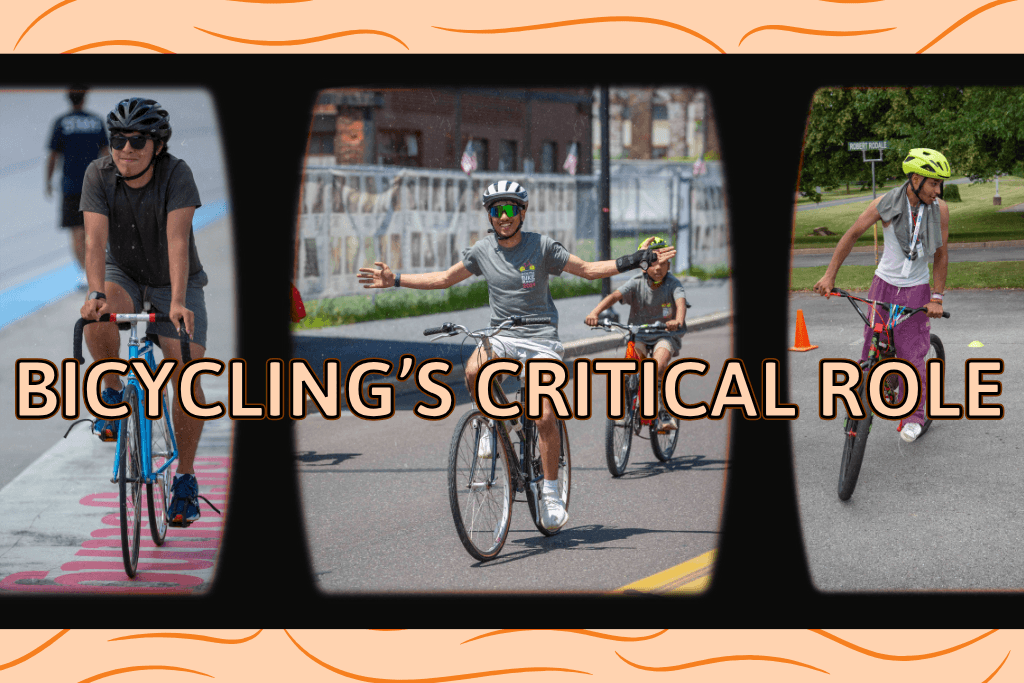
Research consistently shows that outdoor activity improves overall well-being compared to a sedentary lifestyle. However, engagement matters—merely being outside without an activity is far less beneficial than actively participating in one. Among outdoor activities, bicycling offers three distinct advantages: recreational use, a career pathway, and a mode of transportation.

The simple act of bicycling has been proven to aid in 3 key areas of mental and physical health.

  1. Stress Relief: Research by Craft and Perna, as highlighted in _The Benefits of Exercise for the Clinically Depressed_, demonstrates that cycling helps alleviate stress by releasing endorphins, leading to improved mood and emotional well-being.
  2. Improved Sleep Quality: Sleep disturbances are common among young adults experiencing mental health challenges. Regular bicycling has been associated with improved sleep quality, helping to regulate sleep patterns and contribute to better overall mental health. Journals like “_High exercise levels are related to favorable sleep patterns and psychological functioning in adolescents: a comparison of athletes and controls._” highlight this.
  3. Enhanced Cognitive Function: Bicycling is not only a physical activity but also a cognitive one, requiring attention to the environment and decision-making. Research published in _Be Smart, Exercise Your Heart: Exercise Effects on Brain and Cognition_ (2008) links cycling to improved cognitive function, reduced brain fog, and enhanced concentration.

Bicycling also supports both independent and social engagement. For those who prefer solo activities, cycling fosters autonomy, self-motivation, and confidence. Autonomy is so important for youth, it leans into one of the strongest aspects of bicycling: connecting communities and people. Conversely, group cycling strengthens community connections, reducing social isolation and promoting cross-cultural interactions.

An Increase In Innovation Should Be An Increase In Ridership

In the last ten years, electric bicycles have increased in use among consumers, federal funding and rebates have incentivized bicycle ownership in select states, and local cycling initiatives have expanded. Despite all of that, bicycle ridership for youth ages 7-17 is at a generation low as reported by the National Sporting Goods Association in 2024. It’s estimated that about 41% of 44 million children and teens (7-17) participated in bicycling throughout the 2000’s compared to an increase of 50 million children but a sharp decrease to only 22% of them participating in bicycling in 2024. Despite an increase in the total youth population, fewer children and teens are cycling today than two decades ago.

This decline has serious consequences. Four out of five children are missing out on the cognitive, emotional, and physical benefits of cycling. Additionally, many youth lack basic knowledge of how to navigate their cities by bicycle, further limiting their independence and mobility.

The Elephant In The Room: Safety

This raises a few questions:
– Are we designing cities and policies that actively promote sedentary lifestyles?
– What lessons can we learn from past eras of high youth ridership to inform the future?

The bicycling industry, now valued at over $8.4 billion, has evolved to incorporate extensive safety measures, adapting to modern infrastructure and transportation needs. Likewise, the 21st century brings evolved curriculums in youth-bicycle programs, finding unique ways to educate and perform on modern-day safety requirements.

One common project model called Earn-A-Bike, for example, demonstrated modern teachers. Over an eight-week period, students restore donated bicycles, learning essential maintenance skills. Upon completion, they keep the bicycles they have repaired, for free. Throughout the program, participants also receive structured training on bicycle safety and navigation, ensuring they are well-equipped to ride confidently in their communities.

The Earn-A-Bike program is just one of many solutions that need to be expanded and shared with communities nationwide. Education on these options is essential—not only for youth but also for program coordinators, educators, and local officials, whom we refer to as our support network.

Through the Youth-Bike Hub (YB Hub), the National Youth Bike Council is working to elevate and promote youth bicycling programs across the country with our support network. In its first year alone, the YB Hub identified 14 different ways that youth-focused bicycle programs positively impact their communities beyond health benefits. We help facilitate knowledge-sharing year-round through monthly webinars, an annual conference, and an online resource hub. Expanding access to youth bicycling is not just beneficial—it is essential.

Support for the National Youth Bike Council is an actionable step to defend this generation from what the CDC (U.S. Centers For Disease Control and Prevention) has been classified as a Mental Health Crisis for another year in a row. Get involved by donating to make an impact or emailing us (info@nybcouncil.com). With your support we can ensure that bicycling remains a cornerstone of youth wellness, independence, and community engagement.

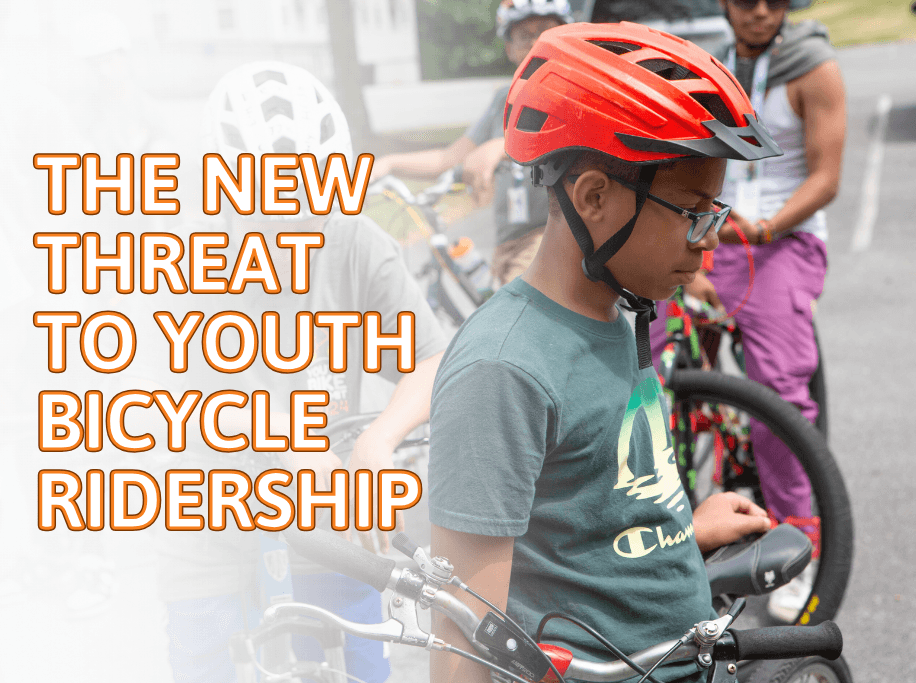
The New Threat To Youth Bicycle Ridership

Author: Council Members Joshua

Joseph, a dedicated instructor at a Rhode Island-based middle school, leads a bicycle program that teaches students how to ride for the first time. His students gain confidence and independence as they explore local trails during school hours. However, the program faces a significant challenge: retention. As students transition to high school, engagement declines, and many never return to bicycling. Without continued participation, the motivation to ride fades, limiting the long-term impact of programs like Joseph’s.

This challenge is not unique. Programs such as Silver Stallion, based in the Navajo Nation and led by Scott Nydam and his team, encounter similar difficulties in sustaining ridership and engagement over time.

Data from the National Sporting Goods Association highlights the severity of this decline. According to their 2024 report, youth bicycle ridership has dropped to a generational low. In the early 2000s, 41% of 44 million children and teens (ages 7-17) participated in bicycling. Despite an increase in the youth population to 50 million, only 22% engaged in bicycling in 2024. This means that four out of every five children are without the essential cognitive, physical, and emotional benefits of bicycling. It also indicates that a vast majority of youth are not learning how to navigate their cities by bicycle, leading to a knowledge gap that further discourages ridership.

IS THIS A CRISIS? WHY IT MATTERS

Beyond the concerns of individual bicycle programs, this decline raises broader questions:

  • Is bicycling becoming outdated for today’s youth?

Photo provided by Scott Fitzgerald during the National Bicycle Dealer Associations Summit, demonstrating the lack of ridership despite the increase in youth population in the U.S.

MENTAL HEALTH THREATENS RIDERSHIP GROWTH

How does a decrease in mental and physical wellness relate to bicycle sales for youth, youth bicycle ridership, and participation in bicycle programs? The Global Mind Project’s 2024 report reveals that distress levels among young people have doubled in the last five years, rising from 15% in 2019 to 30% in 2024, with minimal signs of improvement. The report states, “Younger age groups saw a dramatic decline of over 40 points, while those over age 55 showed little change. Since the 2021 low, recovery among younger generations has been minimal.”

The Global Mind Project, The Mental State of the World in 2024 Report: Shows an increase in distress and struggles for all age groups

The CDC has officially declared youth mental health a crisis. Yet, despite mounting concerns, bicycling—once a natural outlet for stress relief, physical activity, and social connection—is not a first choice of self-prescription or promoted as a solution. As motivation and activity levels decline among young people, how will they rediscover bicycling as a source of well-being?

Joseph’s middle school program provides students with physical activity, social connection, and a sense of achievement. However, when students age out or lack opportunities to continue riding beyond school hours, they lose access to these benefits. In a generation overwhelmed by digital distractions and constant demands on their attention, bicycling is often overlooked in favor of screen time—despite being an unmatched tool for autonomy, stress relief, and overall well-being.

Without intentional intervention, the industry risks allowing this decline to continue, further distancing young people from the benefits of bicycling.

OUR ROLE IN COUNTERING THIS THREAT

Joseph recognizes that to sustain youth bicycling in Rhode Island, he needs support. His search leads him to the Youth Bike Summit, a three-day annual event that brings together educators, program leaders, and youth advocates from across the U.S. Through workshops, discussions, and peer learning, he discovers strategies to keep students engaged beyond middle school, re-engage alumni, and build partnerships that support cycling within families and communities.

At the summit, young people take center stage as keynote speakers, facilitators, and decision-makers. Through their leadership, attendees like Joseph gain fresh perspectives on how to address declining ridership and rising mental health concerns. Equipped with new insights, resources, and a network of fellow advocates, Joseph is better prepared to sustain and expand his program’s impact.

Knowledge sharing and modernizing youth bicycling programs are critical to reversing this trend. Supporting initiatives like the Youth Bike Summit and ensuring that educators, community leaders, and organizations can attend is essential to preserving and growing youth ridership.

Get involved today. Support meaningful bicycling experiences for young people by donating or partnering with us (email us: info@nybcouncil.com) to reverse the youth ridership decline. Together, we can ensure that bicycling remains a vital tool for youth wellness, independence, and community connection.

Rising Pedestrian Deaths Are Not Evenly Distributed

Author: Council Member Nora

Happy New Year to all! This is your blogging council member, Nora, here to kick off 2024 with you. For our resolution, we’ve decided to slightly change our approach to these blogs by including, along with what the Council is doing, more in depth investigations into topics that youth in transportation are interested in.

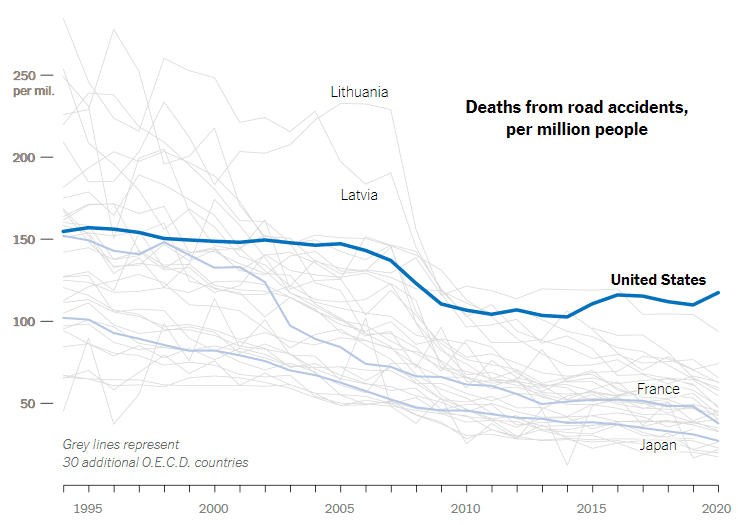
There is a growing recognition that pedestrian deaths are and will continue to rise every year and that the US is outpacing other countries in pedestrian deaths. While these statistics are not good, greater awareness about the problem and showing that other countries are dealing with pedestrian safety in more successful ways means there is even more pressure on US governments on all levels to make an effort to change our car focused mentality.

Hearing about this increased recognition of the US’s pedestrian safety problem gave me a moment of ‘yes! Thank you for seeing what is happening!!’ As I was celebrating this small step towards progress, a friend called to my attention a problem in pedestrian safety I had not been seeing. So in this blog, I want to highlight a growing group of those pedestrian fatalities that are often forgotten – those without permanent residence.

Those who are experiencing homelessness are a vulnerable community to start off in terms of impact. However, they are particularly vulnerable to traffic fatalities as they are more likely to be living next to roads and high traffic areas such as highway interchanges and major road underpasses (2 – Why Are So Many More Pedestrians Dying in the US?). High-speed corridors, even with the danger they present, offer a particular refuge because the land next to highways is public land. Underpasses and bridges offer protection from weather and the relatively remote location as well as the public land aspect means individuals are less likely to be told to leave by police or land owners. This means they are more likely to be near cars at night, which is when most pedestrian deaths are occuring. There are many other factors that make this community more vulnerable to pedestrian fatalities including not being able to use other modes of transportation including cars and buses due to costs (4 – Homeless More Vulnerable To Pedestrian Accidents). These factors depend on the individual and their situation but in general if you are experiencing homelessness you are more likely than a housed person to die as a pedestrian in a traffic related incident.

Los Angeles has found that those experiencing homelessness are 53 times more likely to be killed in traffic violence than the national average. According to the Portland Bureau of Transportation, in 2021 “seventy percent (or 19 out of 27) of pedestrian deaths were houseless community members; and 33 percent (21 out of 63) of all traffic deaths were houseless community members.” (3 – Traffic Crash Report 2021) These statistics are talking about Portland, Oregon in particular but nation-wide there has been an increase in people experiencing homelessness pedestrian deaths. Across the nation those experiencing homelessness make up between 60% (in Colorado Springs) to 15-20% (San Francisco) of traffic deaths (1- Living Without Refuge).

When the problem is laid out in front of you it’s clear why those who are experiencing homelessness are more vulnerable to cars, so why do we often forget to include this community in our talks towards a safer transportation environment? While advocating for young people specifically, we empathize with this group of overlooked pedestrians, because we know what it feels like to be a part of an overlooked group of road users. One of the reasons, I think, is that most cities/counties/states don’t monitor whether someone was experiencing homelessness and so the data is not collected. This makes it hard to understand the size of this national problem.

However, some cities are starting to include this data into their reports. 2021 was Portland’s first year of including homelessness into their pedestrian fatality report. They went from 70% of pedestrian fatalities were people experiencing homelessness in 2021 to 36% in 2022. When we acknowledge the problem, as the US is starting to do with general pedestrian safety, we can make changes to achieve solutions. To do this we can’t forget about communities, in order to achieve Vision Zero (where there are no pedestrian fatalities) we need to see how everyone is impacted.

If you’re interested in learning more, check out the below resources on this topic:

1 – Usa.streetsblog.org Living Without Refuge
2 – Why Are So Many More Pedestrians Dying in the US?
3 – Portland.gov Traffic Crash Report 2021
4 – 13wmaz.com Homeless More Vulnerable To Pedestrian Accidents


Expand Your Mind With Bikeshare

Author: Council Member Nora

Aloha May! It’s your favorite council member blogger, Nora, and it is finally getting consistently warm and sunny here in Washington D.C. This makes May one of my favorite months because it’s perfect weather for National Bike Month. There is nothing better than a sunny day with a bike-fueled breeze to cool you off. National Bike Month was started in 1956 by the League of American Bicyclists to promote bicycling around the nation, with a Bike to Work/School Week (May 15-21) and Bike to Work/School Day on May 19th.

Even if you don’t own a bike, there are still many ways to participate, such as through bike share programs. Bike share is a system that allows people to access bikes in stations across the city through either single-time payment or with memberships – you can get to a local bike share station by train!

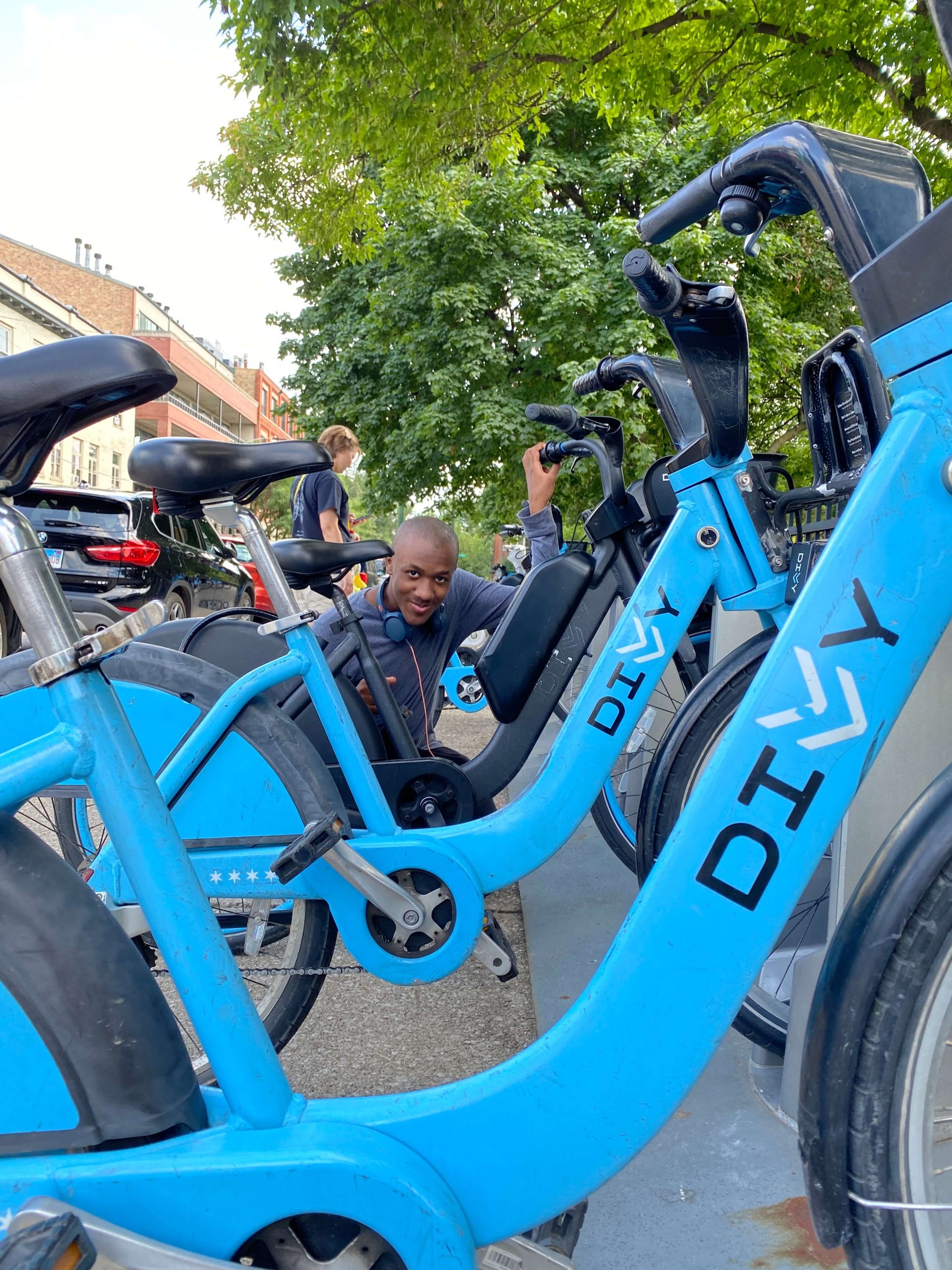
Washington D.C. became the first place in the US to implement a bike share known as SmartDC in 2008, which is now known as Capital Bikeshare. Now, all 50 states have followed suit. Capital Bikeshare is a station-based system where you can pick up and lock up your bike after your trip. However, there are bike share programs that don’t have these docking stations that you may have seen, including JUMP and Lime e-bikes. There are also hybrid systems that allow users to pick up at a station and lock bikes somewhere else combining both reliability and flexibility, such as Divvy Bikes, Blue Bikes in New Orleans, and BIKETOWN in Portland.

Bike share programs aren’t just good to get you where you need to go in a cheaper, sustainable, and time-saving manner, but they also help reduce air pollution making your community healthier. So definitely check out a bike share program if you come across one this month or whenever because biking can be and should be enjoyed all the time! Brian, do you know of any bike share programs? How are you celebrating National Bike Month?

If you want to learn more about your state’s bike share programs, click here.