Even Ghost Bikes Have Lives

Wow, it is definitely a hot summer in July! I sympathize with the rest of you dealing with the heat, in Georgia it’s a wall whenever I go outside thanks to the humidity. I came to grips with that heat wall the other day while I was out biking on the Beltline (a terrific pedestrian-only path that runs all over the city of Atlanta). Though, on that trip what caught my attention was a white bike tied to a telephone pole at a crosswalk where the Beltline leads to Piedmont Park. I am familiar with this bike, it sits across from my high school. For a while I paid no attention to it, even when it was first placed there I didn’t really realize it until I learned what it meant.
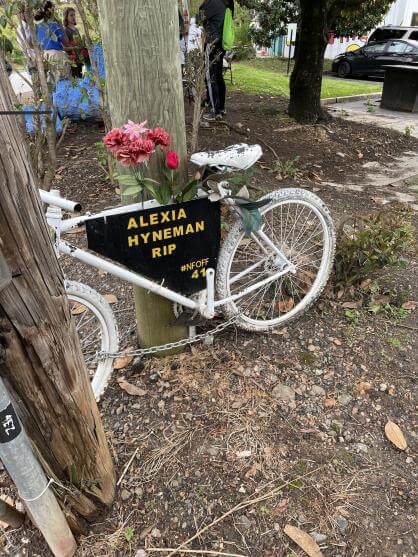
This white bike is one of many Ghost Bikes. This Ghost Bike is for a student who in 2016 was struck by a car at this intersection and died on the way home from school. She was 3 years older than me.

A Ghost Bike serves as a memorial, to remind the world that a seemingly uninteresting corner completely changed someone’s life. They are usually a bike that is irreparable and unusable, so as not to take a bike off of the street. There are over 600 ghost bikes in the US, there are more than 250 ghost bikes in New York City alone. They can be found all over the world from Ukraine to Ecuador.

They are a reminder that we often view the pedestrian at fault, as was the case of my peer. They are a reminder that a fragile bike stands no chance against a car. They are a reminder that in only the first half of 2022 drivers in the United States struck and killed 3,434 people.

Ghost Bikes are a reminder of the work that needs to be done and the work that has been done. In my case, we testified and worked with the City Council to install a HAWK signal, a scramble (when all the cars have to stop for pedestrians to cross), and cameras to create a safer environment for not only the Beltline traffic but for the students going to and from school. Still in 2022 a student was hit by a car near the intersection, she went to the hospital and is ok now but it is a reminder that more work needs to be done. Shortly after during the 2022 Youth Bike Summit, I lead a group out to this crosswalk. We put flowers in front of Alexia’s white bike and discussed the intersection, and how the 4-lane thoroughfare meeting the 3-lane road was built for cars, not pedestrians. We discussed how we can change the intersection to focus on the pedestrian so that we can prevent any more accidents from happening. Now there are plans to fully rework the intersection by repaving the streets.

What has been insightful for me is that once I learned the story of ghost bikes I couldn’t stop seeing them. When you are aware of them you learn so much more about the design of transportation. So much is said in a white locked-up bike.

Have you seen any Ghost Bikes near you Brian? What has been your experience with Ghost Bikes?
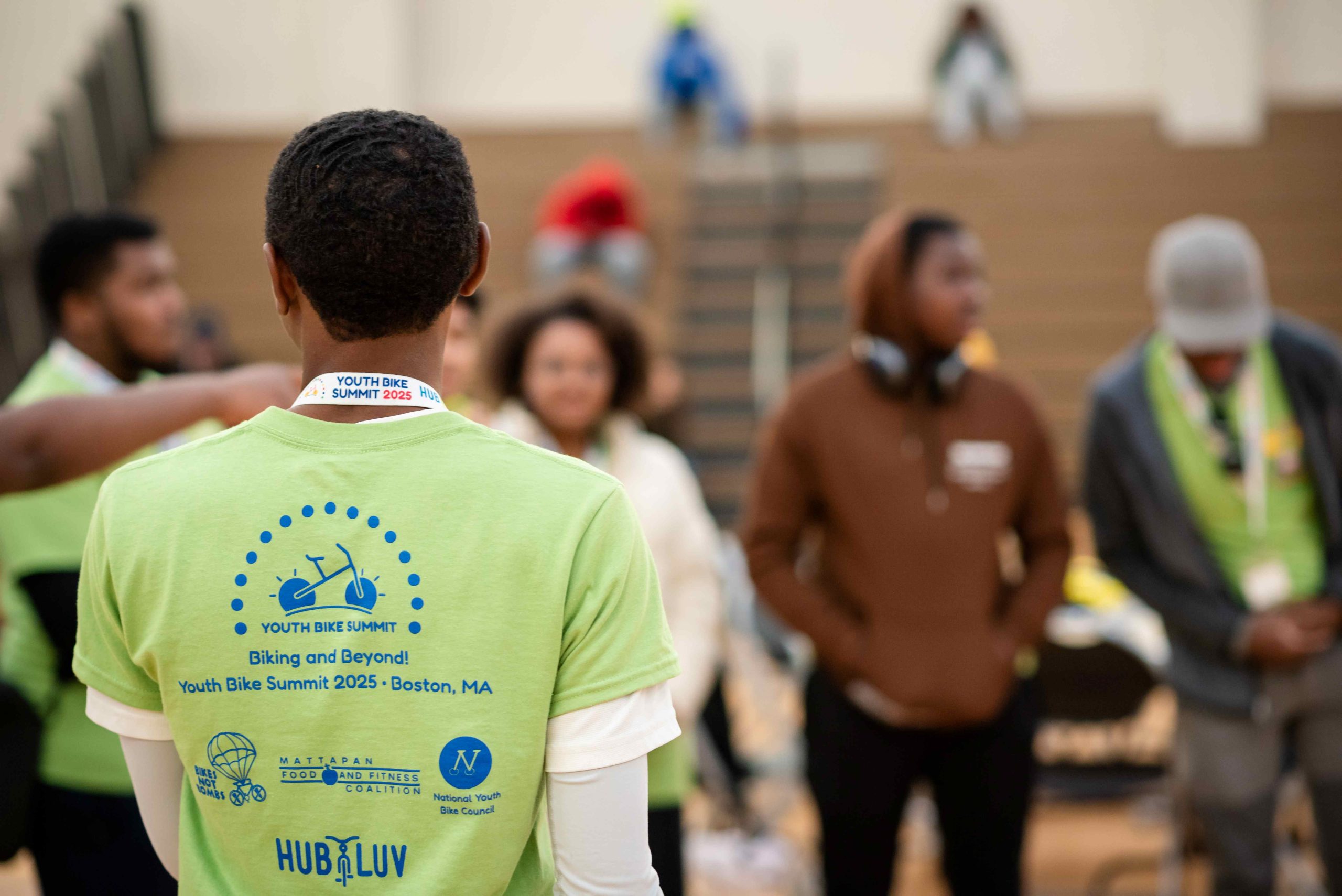
2025 Awards At The Youth Bike Summit

Invest In Women’s Entrepreneur scholarship

This year, the National Youth Bike Council worked with select Earn-A-Bike organizations to nominate a young woman for the Invest in Women’s Entrepreneur scholarship. This award is given to a young woman that “goes above and beyond, demonstrating proactiveness and leadership qualities in their bicycle program or community.” This award is funded by Invest In Women’s Entrepreneurs and gives the recipient a scholarship to attend the Youth Bike Summit.

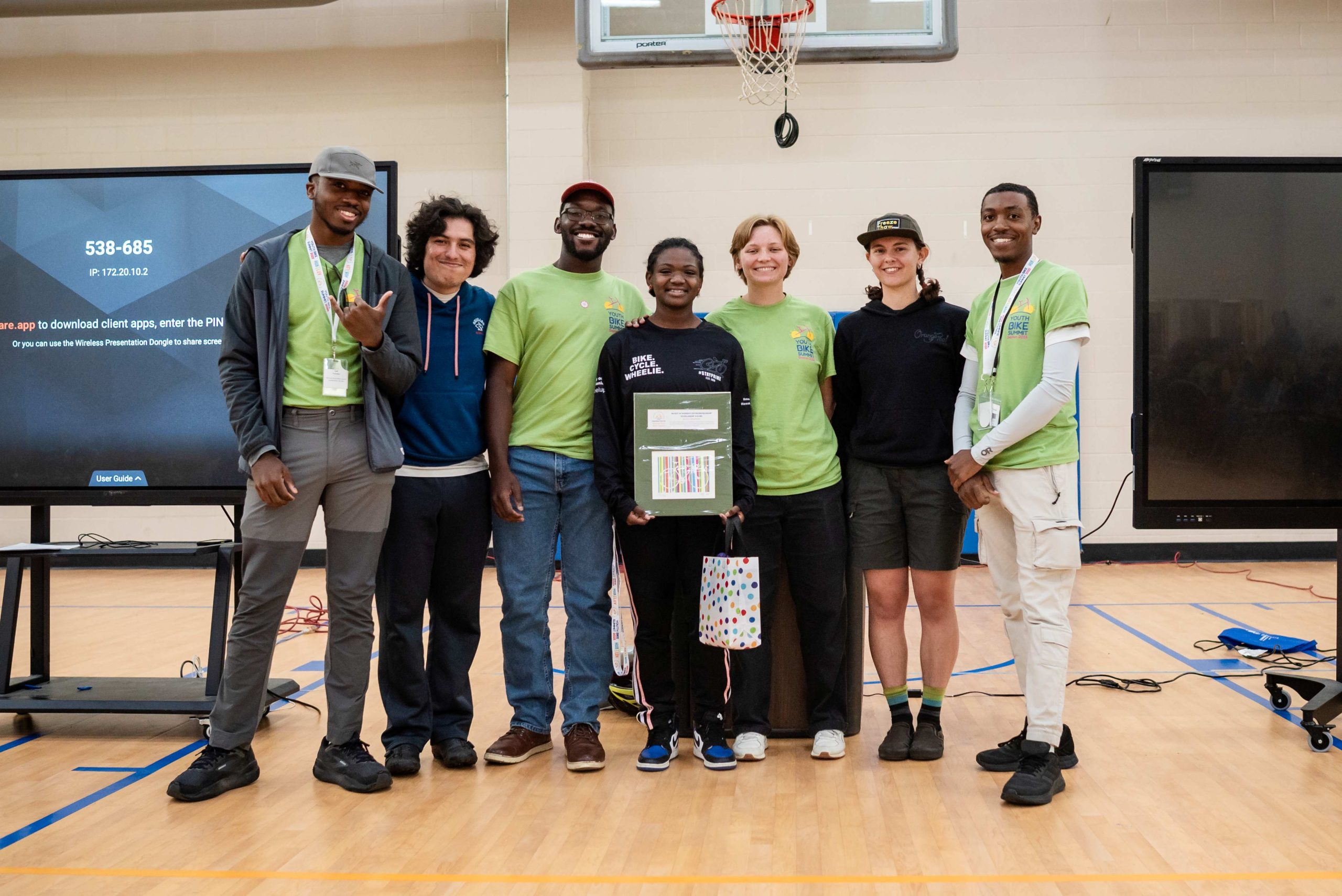
The 2025 Invest in Women’s Entrepreneur scholarship was awarded to Kayla Edwards, a high school student living near D.C., on June 1st.

Kayla spends her time representing the powerful impact cycling has had on Black youth in Washington, DC through her work at Pedalheads, a youth bike camp. She is also a member of Prime Ability, an organization dedicated to uplifting Black youth through cycling and promoting healthy lifestyles as positive outlets for teens from challenging backgrounds. After learning about her nomination, she happily mentioned a moment that has stuck out to her in her work: “I was helping a young kid who believed biking wasn’t for him. He’d never seen anyone who looked like him doing it as a young black kid. He was nervous and didn’t even want to try but I talked with him, taught him step by step [how] to build his confidence. When he finally rode on his own, the pride on his face said everything. That moment reminded me why representation matters and why I do this work. At the end of the day I encouraged him to tell his friends and stuff. With the lead of Coach Clark, we were also able to go to Hart Middle School to build bikes to kick off their Riding for Focus Program.”

Kimberly and Kristi award

The National Youth Bike Council introduced and nominated a young person for the first ever Kimberly and Kristi award that would be presented at the Youth Bike Summit in 2025. The award is in honor of Kimberly White and Kirsti Manco, two young ladies who were pivotal to the start of the Youth Bike Summit movement. The Kimberly and Kristi award celebrates dedication, passion, and taking initiative for a young person, a team, or an organization whose work creates or has the potential for positive change that impacts a community of people the award-winner belongs to.

The 2025 Kimberly and Kristi award was presented to Allan Feldman, a college student at Brandeis University, located near Boston Massachusetts.

Allan’s nomination recognizes his contributions to Brandeis University through a small team of students that planned to revive a sustainable lifestyle on campus through a bicycle share initiative. Allan has also been outspoken and actively engaged with his local bicycle coalition both on and off campus, working to increase road safety of all road users. When receiving the award Allan mentioned his biggest personal project to us. “My biggest personal project has been working to get a bicycle share program on campus, similar to other universities in the Massachusetts area like Tufts and Wellesley.”

49 States and 500+ Miles Later

Happy June, I hope you are doing well and keeping cool during a hot summer! With Pride Month and the latest federal holiday, Juneteenth, June offers a time to celebrate and reflect on diversity within our communities. As we have discussed in previous blogs, biking has been historically dominated by white male bikers but there are organizations pushing to make biking more inclusive to all communities. Many of them, like NYBC, are youth-fueled. I had the opportunity to talk with one of those organizations, Pittsburgh Youth Leadership (PYL). Specifically, I talked to 8 riders who were currently on a 500-mile trip from Queensbury, NY to the Basketball Hall of Fame in Massachusetts. Almost all of them were young, black, and from lower economic means and were not attempting long-distance bike trips before PYL. Yet, they had just finished their 6th day and had already done around 220 miles.

PYL is a nonprofit organization that gives inner-city, low-income, at-risk youth access to biking through all-expenses-paid bike rides across the country – we’re talking about hundreds of miles. They have also been to 49 states, with Hawaii being the exception and they have proof. John Harris (this was his 4th trip with PYL) showed me the “home base” van that has a bumper sticker from every place PYL riders have been. So how did they do it?

Morrell Rogers (2nd trip) described the intense training they do to learn bike safety techniques, how to pass correctly, change gears, and get a taste of long-distance riding. Usually, they are around 40 miles. Caleb Freich (5th trip) says that PYL definitely helps him get and stay in shape with Caiy Whim (1st trip) adding that the training rides increase your strength, endurance, and stamina by forcing everyone to face and surpass their limits.

Anthony “AJ” Evans (1st trip) heard about PYL from a school friend and, when he became old enough, was recommended by his school to join, all riders must maintain a 2.0 GPA. He and all the other riders said that what the PYL teaches you is not just physical ability but mental strength. As AJ put it, “You always find a way to push through, you have to persevere,” because once you get started you can’t turn around. Cenire Scott agreed, through PYL he learned that biking is a lot harder than you think, you can easily burn out if you haven’t trained hard enough, but he now knows how to persevere through the burn.

Landon Pickett (1st trip) told me that they ride on both trails and next to roads, rain or shine. Unfortunately this trip there was some rain on rocky terrain, making it the hardest day so far. Everyone seemed to doubt whether they or their bikes would make it through, but as Morrell told me thanks to the perseverance they have built up they were able to pass through.

This is just one of many trips that PYL offers this year with most riders planning to go on as many trips as possible. PYL really stands out to me because of how it is able to transform the idea of biking and include more people in the biking community. One thing they left me with was that you only need to go on one ride to totally reframe your mindset not just in terms of biking but in what your limits are and how you can surpass them.

As I learned from Morrell, Caiy, Caleb, AJ, Moneaz, Landon, Cenire, and John biking introduces you to a community that not only strengthens your physical health but also your respect for yourself and the world around you. I want to shout out PYL this month for doing so much to bring the world of biking to more people and to the PYL riders for persevering through! Good luck with the rest of your rides!

This has not been the only time we have spoken with young people from PYL, Joshua, another Council member, had the chance to bring Desmond, another PYL rider, on a Council Chatcast. Once again, during that conversation, Desmond mentions how being included has changed his life as he has traveled with PYL and experienced things through a new lens on a bicycle and over tons of miles!

The longest trip I have ever done was 250 miles and I cannot imagine doing any more than that. What about you Brian? What is the longest bike ride you have done? How does riding backward change the experience? How do you think we can get more people on bikes?

If you want to find out more about PYL check out their website here, if you are with an organization like PYL, consider hopping into the YB Hub!

May is Bike Month but it is also National Clean Air Month

We are still in May but since it’s Bike Month, we decided to post two blogs to celebrate! This is your dutiful council member blogger, Nora, here to share the wonders of May with you. As a pedestrian advocate, I have learned that transportation touches so much more than just our roads and paths. By creating a more bikeable environment we improve health, provide more affordable means of transportation, improve the health of the environment, and so much more. Transportation, especially biking, has a positive impact on so many sectors of our lives. Today, I am going to talk about one of those sectors– decreased emissions, and we know we aren’t the only youth group to believe this.

May is Bike Month but it is also National Clean Air Month. Clean Air Month was started by the American Lung Association in 1972 as a week-long event and later initiated the enactment of The Clean Air Act, one of the first pieces of environmental protection legislation. This month allows for reflection on how we can improve air quality both indoors and outdoors. Now in DC as in other places another contributor to air quality is pollen especially during cherry blossom season. As someone who is from Georgia, pollen usually doesn’t phase me but the pollen in DC is on a whole different level. Although the flowers are very nice to look at. However, pollen is not a malicious emission but carbon is. Part of the focus of Clean Air Month is to reduce our carbon footprints and one of the ways you can celebrate both Clean Air Month and Bike Month is to bike to work because vehicles are the biggest air polluters.

Clean air is not just good for the environment, it’s good for all of our health, as poor air quality can contribute to cancer, bronchitis, allergies, and asthma. An easy way to see the effects of poor air quality is by looking at sunsets, heavy orange and red sunsets show that there are a lot of particles in the air either from fires, volcanoes, or pollution. These particles trap the light allowing for the longer wavelengths such as red and orange to show in the dusk sky. But every individual can do something about it! How are you participating in Clean Air Month, Brian? How do your sunsets on the West Coast look?

To see the air quality of where you live click here.

Expand Your Mind With Bikeshare

Aloha May! It’s your favorite council member blogger, Nora, and it is finally getting consistently warm and sunny here in Washington D.C. This makes May one of my favorite months because it’s perfect weather for National Bike Month. There is nothing better than a sunny day with a bike-fueled breeze to cool you off. National Bike Month was started in 1956 by the League of American Bicyclists to promote bicycling around the nation, with a Bike to Work/School Week (May 15-21) and Bike to Work/School Day on May 19th.

Even if you don’t own a bike, there are still many ways to participate, such as through bike share programs. Bike share is a system that allows people to access bikes in stations across the city through either single-time payment or with memberships – you can get to a local bike share station by train!

Washington D.C. became the first place in the US to implement a bike share known as SmartDC in 2008, which is now known as Capital Bikeshare. Now, all 50 states have followed suit. Capital Bikeshare is a station-based system where you can pick up and lock up your bike after your trip. However, there are bike share programs that don’t have these docking stations that you may have seen, including JUMP and Lime e-bikes. There are also hybrid systems that allow users to pick up at a station and lock bikes somewhere else combining both reliability and flexibility, such as Divvy Bikes, Blue Bikes in New Orleans, and BIKETOWN in Portland.

Bike share programs aren’t just good to get you where you need to go in a cheaper, sustainable, and time-saving manner, but they also help reduce air pollution making your community healthier. So definitely check out a bike share program if you come across one this month or whenever because biking can be and should be enjoyed all the time! Brian, do you know of any bike share programs? How are you celebrating National Bike Month?

If you want to learn more about your state’s bike share programs, click here.

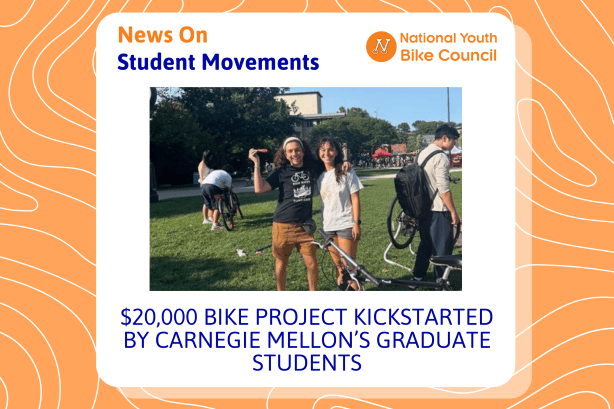
$20,000 Bike Project Kickstarted by Carnegie Mellon’s Graduate Students

t’s called the Tartan Bike Project.

What’s top of mind for college students these days? Freedom to move, affordable transportation, and finding real, meaningful friendships. That’s the spirit behind the Tartan Bike Project, launched by two graduate students, Kenedy and Hosea, who together raised $20,000 toward an on campus ‘Bicycle Project’.

Naturally, we were curious—how did they pull that off? In short, it took a lot of planning.

Since last year, the pair have been moving on launching a bicycle repair & rental space on campus in their free time. Its goal? To create a welcoming space where Carnegie students can gather around bikes, get repairs, borrow a ride, and keep campus life active and mobile—especially in the warmer months.

We Interviewed Kenedy

Moving to a new city was difficult,” Kenedy shared. “OBP was a big part of my community, so I wanted something similar in Pittsburgh.

She’s talking about the Orange Bike Project at the University of Texas (UT) in Austin, where she did her undergrad. It was a student-run campus bike program that offered not just tools and repairs—but community. That experience sparked the inspiration behind the Tartan Bike Project.

When Kenedy started college at UT, she got a bike. Then she saw a call for volunteer mechanics at the Orange Bike Project. That was her entry point—not just into fixing bikes, but into a unique kind of student environment with a shared vibe and purpose. The bike shop became her second home.

After moving to Pittsburgh and meeting Hosea, Kenedy found herself in familiar territory—needing to fix her bike. On top of the need to fix it, she was getting ready to invest in a better and higher-end bicycle. The gap of there being no on-campus bicycle spaces got the pair thinking, maybe they were not the only ones with this issue.

After about a semester of listening and getting used to Pittsburgh, they figured out they were right. They were not alone in their needs. The hesitation amongst their peers to invest money or time to learn about bicycles mostly stemmed from a lack of repair support on campus. That growing need, mixed with their own desire for a shared student space, gave a new meaning to something bigger: the Tartan Bike Project.

Getting $20,000

The first part of the journey to starting a Bike Project was not straightforward but they had an idea: a pop-up bicycle stand. Hosea and Kenedy printed a ton of posters and hung them up around the bicycle racks on campus, drawing in over 80 students to their one-day pop up bicycle stand. To make sure it was not a fleeting idea, the two prepared a survey which about 40-50 students filled out, where they asked for volunteers, opinions and needs.

This initiative was so successful that the pair were invited to table at Bike Week which came up a few months after the pop up table. This initiative was run by Transportation Services at Carnegie, led by Michele Porter, the department’s Director. This event offered bicycles that were left around campus to passing students alongside a lot of other amenities from off-campus bicycle providers. The main issue the two noticed was that the bicycles that were given away would end up abandoned again because students had no clue on how to fix up the bicycles. With the help of Kraynick’s Bike Shop, who provided them the tools, the opportunity turned into another promising success, where they fixed as many bicycles as they could that day, building their case for why an on-campus bicycle project was needed.

They worked closely with the school and some friends from Pitt Bike Cave to curate a proposal that went through the Graduate Student Assembly. Simultaneously, they made sure to make friends along the way with Michelle Porter.

Reflecting back, Kenedy mentioned that her role models for starting the Bike Project were more
than just the Orange Bike Project students, but Yellow Bike (also located in Austin), Pitt Bike Cave (located in Pittsburgh), and FreeRide. Each organization’s presence in her communities helped make an impact on Kenedy’s decision that an on campus Bike Project would be worth it.

The proposal was approved by the Graduate Student Assembly which got them a multi-year commitment to support the Tartan Bike Project with $20,000. (Later, the Graduate Student Assembly would approve another 3K of additional funding to support other more immediate project needs.)

What’s Next?

Connect with people around you.” That was one piece of advice Kenedy mentioned for students who are considering starting a bicycle project at their university. Their current challenges are now putting into action all the needs they mentioned in the budget.

Hosea and Kenedy know their project is long lasting as support in their work from Carnegie demonstrates the university’s multi-year financial commitment to student transportation needs and fostering on-campus student relationships. The two have big plans and wishes, all the way from offering credited classes with the Tartan Bike Project to being a part of the school’s Transportation Service department.

Tartan Bike Project will be open Fall 2025, starting with a few regular hours, and some social aspects.

Do It Yourself

Hosea and Kenedy are not the only ones with on-campus bicycle projects. There are other long-standing bicycle projects that have figured out what makes a university bicycle project work.

Tatiana from Georgia Tech, is the former president of Starter Bikes, a bicycle project very similar to Tartan Bike Project, at a Bicycle Friendly University has agreed to give us the ‘Essentials to start a College Bicycle Program’ on July 14th at 11:30 AM ET. During the webinar, Tatiana, will break down the essential resources you need to start or sustain a bike program on your campus. From sourcing tools and parts to securing space and allies, she’ll share practical tips and lessons learned from running a thriving student-led bike shop at Georgia Tech.

What It Feels Like To Be New To The Bicycle Space

e usually try to spotlight youth ages 24 or younger, but Raven, who is currently employed with the League of American Bicyclists, is a recent 25-year-old and the youngest staff member on the daily team. In addition, Raven is also fairly new to the bicycle advocacy space and, believe it or not, she got a chance to participate in her first lobbying session through the National Bike Summit!

Since this was Raven’s first time attending the National Bike Summit (Bike Summit 22) as a staff member, her experience was divided between attending sessions and facilitating others. On top of that, Bike Summit 22 had multiple ways to attend: “It was a love-hate relationship with being able to meet advocates and attend sessions in-person but also balancing attending virtually while taking on the responsibilities of being an admin for the event,” Raven expressed. “I left this year’s Summit knowing that there were still many conversations for me to listen in on and so many more advocates to meet next year.”

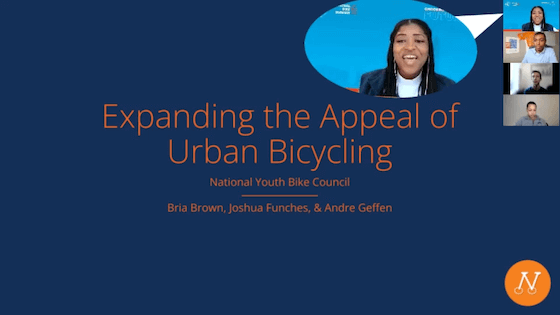
Raven was the facilitator for our presentation, where we spoke about how stigma, law enforcement, and infrastructure played into preventing the expansion of urban cycling. She kicked us off and had some great feedback at the end of the presentation: “The topic was really relevant and relatable.”

Other presentations that sparked her interest as a first-time attendee and admin were a presentation on how to encourage local businesses to apply to the Bicycle Friendly Business program and conversations around finding new community spaces to encourage people to ride bikes. Right on point, because she was trying to gain confidence for riding a bicycle to the National Bike Summit in D.C. for the first time. Raven described the journey as a scary, but fulfilling experience, noting that Bicycle Friendly Communities and the topics around expanding infrastructure appealed to her as someone with little to no experience riding in an urban environment.

“The presentation was easy to digest and was broken down very well. Also, no one presented a game at the end of their presentation like what I saw the National Youth Bike Council’s presentation do!” – referring to our version of ‘finding Waldo’. The game was short and sweet and may still be available if you take a look at what participants had to do to win!

Raven mentioned, “I was trying not to lose my ‘host face’ even though I agreed with a lot of what you all were saying.” She goes on to say that statistics aren’t just numbers when it comes to law enforcement. Saying that before she joined the League of American Bicyclists she was not aware of the statistics, but she knew enforcement was an issue from her own personal experience, “it’s good to hear that the stats are not just stats, they are reality.”

“I did not think people could be so angry and resentful towards people on bicycles,” this statement is a common theme among the youth community the Council is boosting and was included by Raven in her feedback to us about the presentation. She also mentioned how she was pretty disconnected from the whole movement in general before joining the League, but not on purpose. Raven was more of a walker and learning about all the notions around bicyclists was an enlightening moment at our presentation and throughout the experience of the National Bike Summit, this makes the reason behind her day-to-day work stronger.

Actually, she did not learn to ride a bicycle until the age of 24, which is a fun fact. She also pointed out that if she had not been embarrassed to tell her friends she did not know how to ride a bike, she would have given the bicycle a chance sooner. She believes that riding bicycles together removes a portion of the fear a younger rider may experience riding alone in the city, “just one other person was enough to get me to ride.”

As said by her team, Raven’s service is a great addition to the team because she has not been exposed to the bicycle space before and brings a fresh and younger perspective. Through facilitated connections and conversations we hope many of the youth in this growing community can get opportunities and be essential to the bicycle space like Raven.

We thank the League for giving us a great experience at the National Bike Summit this year! Happy Bike Month!

My Times In Chile Point Out Flaws In Our U.S. System

Hello! This is Nora from the National Youth Bike Council team writing to you from Santiago, Chile! While the US is entering spring here on the other half of the world it’s getting colder and colder as we enter fall which is taking some time for my mind to understand.

I am currently studying abroad and among many things I have learned in my time away from the US is that our relationship with cars and bicycles seems to differ from the rest of the world. According to a report by the New York Times, “In 2020, as car travel plummeted around the world, traffic fatalities broadly fell as well. But in the U.S., the opposite happened. Travel declined, and deaths still went up.”

This report surprised me because I don’t believe Chileans are more accustomed or more respectful towards bikers. There are plenty of gaps in Santiago’s biking infrastructure, but one approach I found interesting that Santiago is doing is that every Sunday major streets are closed to cars and bikers, runners, scooters, and anything without an engine take over. It doesn’t happen all day but it is a good chunk of the day and a great way to feel safe and comfortable on the bike while getting to know the city in a different way.

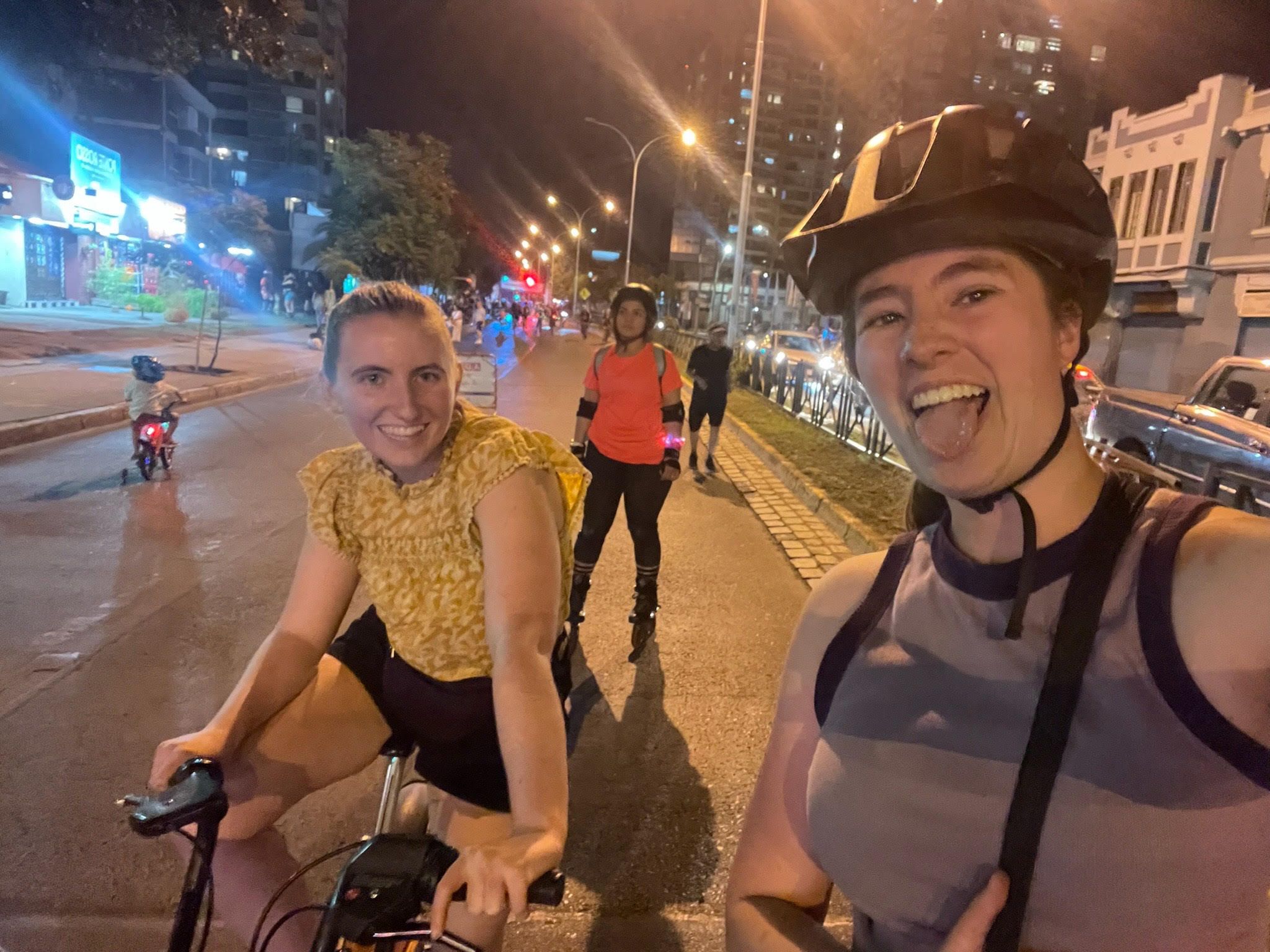
I also got to participate in a night ride, which had the same set up of street closures but everyone was lit up with lights, there were concerts in parks along the route, and families were out together. I felt like I could safely bike around while also getting to know the community.

Now as to why the US is such an outlier in the world we don’t really know but there are a lot of possible reasons. One is that, as Jennifer Homendy, chair of the National Transportation Safety Board said, “Motor vehicles are first, highways are first, and everything else is an afterthought.” I think for bikers this often manifests itself through a feeling like you are not welcomed or you should not be there often because there is no lane for you.

Other theories deal with the kinds of cars Americans drive: often bigger and automatic. Bigger cars mean slower breaking and that pedestrians are hit at a higher point than the legs. Automatic cars means that drivers don’t have to use two hands whereas a stick shift requires a lot more of a driver’s attention, with less attention required in automatic cars drivers are more likely to become distracted by a phone or messing with the radio. Modern cars are also coming with more technology which means more buttons and screens and dials to distract drivers.

“A livable community is one that provides safe and convenient transportation choices to all citizens, whether it’s by walking, bicycling, transit, or driving.” Around the world and unfortunately increasingly in the US communities are not safe for pedestrians, “Each year, unfortunately, pedestrian and bicyclist fatalities comprise about 19 percent of all traffic fatalities with approximately 6,000 pedestrian deaths and 850 bicyclist deaths. Another 76,000 pedestrians and 47,000 bicyclists are injured in roadway crashes annually.”

For me this is a reminder of why we do the work we do at the National Youth Bike Council. Why we need to take perspective from not just the loudest but also the youngest of all pedestrians, because the problem is getting worse. Even a pandemic which significantly decreased the amount of cars on the road did not decrease pedestrian deaths, which means our infrastructure is falling short.

There are many theories why pedestrian deaths are increasing but there are also many ways we can try and change that. From a personal level this can look like reaching out to your local government about places where you see gaps in pedestrian infrastructure. At a community level we can look at Santiago, starting out by handing over streets to pedestrians once a week. At a national level you can join our volunteers or volunteer for organizations like Vision Zero where we either give resources or help organize initiatives that teach a specific set of pedestrians how to avoid common mistakes drivers make. We work to change the fact that the US is an outlier in the world of pedestrian fatalities. So as Bike Month is coming up I hope we can take some time to learn about the problem (or problems)and the solutions. See you next month!

If you want to learn more about how lower income communities are disproportionately affected check out Smart Growth America. Or additional resources.

For more theories including people moving to the Sun Belt check out the Daily Podcast from the New York Times.

The Council In DC

We are live and we are national. That is right, we just got back from the 2023 National Bike Summit in Washington, D.C. during peak cherry blossom season: March 26th-29th. Lot, Joshua, Job, and I met up to give a presentation on where the Youth voice fits into the world of biking. But before I get into that, hi! My name is Nora, one of the newest members on the Council, and I along with the other council newbie–Backwards Brian–will be bringing you blogs every month to discuss Council activities, the world of biking, and more! Brian will be making incredible and fun videos below that will go over what I am writing about but with his own style, which–trust me–gives you a new perspective, that’s what riding backward does.

So nice to meet you, now this is the 23rd National Bike Summit and it is an event where all kinds of commuters meet from around the country to ride, network, and discuss the future of biking. One presentation by Outride focused on the brain and how biking impacts its level of performance in beneficial ways. We even got to see it with a VR headset and a bicycle setup!

One of my favorite presentations was a panel discussion on “Creating Safe Streets for Women” in which the Honorable Jennifer Homendy, Chair of the National Transportation Safety Board, opened up the talk by delving into how biking can be both an empowering and dangerous activity for women, so how do we make it just empowering? Biking serves as a car-free option for women to choose from outside of public transportation–where many women face negative experiences–but more work needs to be done to make public spaces safer for women and all pedestrians who use these public spaces to travel. I particularly enjoyed hearing from Tanisha Sepulveda who is a wheelchair user working to create a cohesive and usable infrastructure for wheelchair users in Seattle, Washington. Tanisha worked to bring attention to the inadequacies of Seattle’s infrastructure by challenging state lawmakers to spend a week free of a car, some weren’t even able to go without a week.

One of the biggest surprises for Lot, Job, and Joshua was running into Yasmine, another youth road-safety advocate. Yasmine was surprised to meet them on one day of the Summit. The shock was so great, it gave us a new friend from Miami and we ended up hanging out all day during the Summit in different presentations.

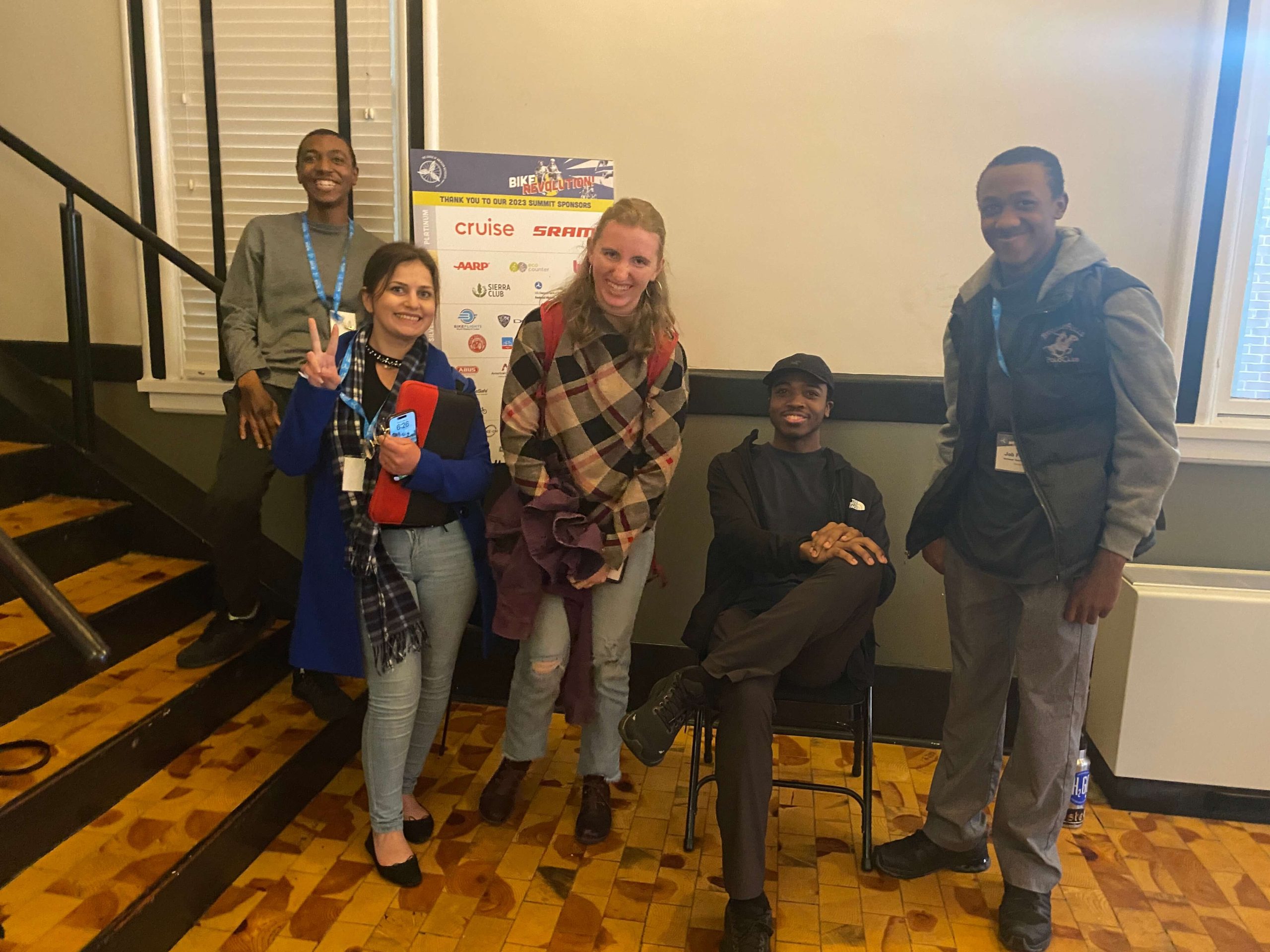
left-to-right (Joshua, Yasmine, Nora, Lot, Job)

Joshua, Lot, and Job headed to the Capitol on Wednesday to meet with their representatives and discuss infrastructure needs for the biking community. The three Pennsylvanians chatted it up with staffers from Representative Madeline Dean; Senators John Fetterman and Robert P. Casey Jr. Then they got asked to lobby other Senators because they were doing so well, woohoo! The organizers obviously realized the power of giving the youth a voice. Young people are also out there making change and we got to tell legislatures about that change and what the Council was up to!

More Questions About The Future Youth Bicycling

Creating a bicycling culture requires a fair share of effort. As an industry that generates over $8.4 billion annually, it’s clear the culture is worth the effort. However, when examining growth trends across different demographics—adults and youth—it becomes evident that the enthusiasm has not translated into increased participation among young adults and teens.

According to the National Sporting Goods Association (2024) and highlighted by Scott Fitzgerald of Pedal Kids USA at the National Bicycle Dealer Association’s 2024 Annual Summit, youth bicycle ridership has dropped to a generational low. In the early 2000s, 41% of 44 million children and teens (ages 7-17) participated in bicycling. Despite an increase in the youth population to 50 million, only 22% engaged in bicycling in 2024. This means that four out of every five children are without the essential cognitive, physical, and emotional benefits of bicycling. It also means that 4 out of 5 children are uneducated or misinformed on how to ride a bicycle in their city.

Photo provided by Scott Fitzgerald during the National Bicycle Dealer Associations Summit.

Is This Decline Going To Stop?

Is bicycling becoming outdated among younger generations? That’s the ultimate question. As youth ridership widely declines, critical questions arise:

Is becoming outdated an existential threat to the bicycling industry?
Have we seen meaningful growth in cycling participation, or does it feel stagnant?
When was the last time bicycling has modernized itself to align with modern day youth interests?
How do we encourage long-term youth engagement with bicycling?

Over the past decade, despite declining youth participation, there has been an increase in bicycle-related programs, initiatives, and federal funding. If investment in cycling programs is growing, why does youth ridership continue to fall? Are current programs effectively addressing the needs of young riders? Are they sufficient to reverse this decline?

Bicycle shops, like Scott’s, a part of the National Bicycle Dealers Association have been raising these concerns. Youth-bicycle programs across the U.S. are most commonly ask how to “tap into best practices from other organizers and increase resource sharing from other groups” or mention how their “biggest challenge is finding ways to speak to and involve youth in [their] events, advocacy, and education. We could use some help from the experts!”

The core issue is clear: how do we establish a sustainable framework that ensures long-term youth engagement with bicycling?

Photo provided by Scott Fitzgerald during the Youth-Bike Hub webinar: Modernizing How We Think About Youth Cycling

What Makes Youth Bicycling, Youth Bicycling?

Now more than ever, to address this crisis it requires a structured, sustainable approach to youth bicycling. Youth Bicycling is defined as participation with the bicycle of children, teens, and young adults up to age 24. Meaningful engagement begins early and should extend through key developmental stages—elementary school, middle school, high school, and college.

Creating a continuous pipeline of programmatic or spontaneous engagement fosters a cycle of participation, leadership, and mentorship at each stage. Other industries have demonstrated how structured youth involvement leads to long-term retention & volunteerism, career pathways, and leadership development. The cycling industry must adopt a similar approach to cultivate a lasting impact.

For this to be successful, a national alliance or governing body should guide and reward achievements toward long-term engagement. Without a centralized effort, programs will remain fragmented, limiting their potential for sustained impact.

What Makes Youth Bicycling, Youth Bicycling?

Now more than ever, to address this crisis it requires a structured, sustainable approach to youth bicycling. Youth Bicycling is defined as participation with the bicycle of children, teens, and young adults up to age 24. Meaningful engagement begins early and should extend through key developmental stages—elementary school, middle school, high school, and college.

Creating a continuous pipeline of programmatic or spontaneous engagement fosters a cycle of participation, leadership, and mentorship at each stage. Other industries have demonstrated how structured youth involvement leads to long-term retention & volunteerism, career pathways, and leadership development. The cycling industry must adopt a similar approach to cultivate a lasting impact.

For this to be successful, a national alliance or governing body should guide and reward achievements toward long-term engagement. Without a centralized effort, programs will remain fragmented, limiting their potential for sustained impact.

The Biggest Risks of Continued Decline?

If this trend is not addressed, both the cycling industry and public health will face significant consequences. The immediate and long-term effects include:

Within the Industry:

Fragmented messaging about bicycling’s role and who it serves
Inefficient allocation of corporate funds, leading to duplication rather than growing the cycling industry
Difficulty in accurately tracking youth ridership trends
Missed opportunities for collaborative, innovational programs as youth interests evolve
A constant need for corporate giving due to high youth turnover rather than youth-to-adult conversion

Beyond the Industry:

Limited accessibility for underserved communities, who are often reached last
A disjointed experience for young riders who must navigate different bicycling disciplines without clear guidance
Inability to establish a national alliance without industry-wide support
Lack of proactiveness leads to lack of say in how this long-term youth engagement is resolved and low ridership numbers are resolved
Missed opportunities to align with broader, current events: i.e. public health and sustainability initiatives
Bicycling risks becoming socially-outdated

A Future Without Young People Biking Does Not Have To Be Inevitable

A coordinated, long-term approach to youth cycling engagement is crucial to reversing this decline. It’s the task of the focused alliance to answer meaningful questions and create accurate metrics to track success. Key questions for industry leaders & alliances to answer include:

What concrete steps can be taken to ensure every child has the opportunity to experience cycling?
How can we redefine industry support for youth bicycling?

One critical and often overlooked strategy is youth leadership development. Programs that actively integrate youth into leadership roles—such as peer mentors, facilitators, and decision-makers—create an organic pathway for sustained engagement. Organizations that prioritize this approach have demonstrated higher retention rates and knowledge about organizational sustainability.

The Role Of The Youth Bike Summit

The National Youth Bike Council leads the Youth Bike Summit, a three-day annual event that brings together educators, program leaders, and youth advocates from across the U.S. to discuss concepts like this with their peers. By placing youth at the forefront—as speakers, decision-makers, and facilitators—the summit highlights the power of youth-driven initiatives.

Knowledge sharing and modernizing youth bicycling concepts is essential. Supporting initiatives like the Youth Bike Summit and ensuring that educators, community leaders, and organizations can attend is critical to creating a sustainable youth bicycle movement.