My Times In Chile Point Out Flaws In Our U.S. System

Author: Council Member Nora

Hello! This is Nora from the National Youth Bike Council team writing to you from Santiago, Chile! While the US is entering spring here on the other half of the world it’s getting colder and colder as we enter fall which is taking some time for my mind to understand.

I am currently studying abroad and among many things I have learned in my time away from the US is that our relationship with cars and bicycles seems to differ from the rest of the world. According to a report by the New York Times, “In 2020, as car travel plummeted around the world, traffic fatalities broadly fell as well. But in the U.S., the opposite happened. Travel declined, and deaths still went up.”

This report surprised me because I don’t believe Chileans are more accustomed or more respectful towards bikers. There are plenty of gaps in Santiago’s biking infrastructure, but one approach I found interesting that Santiago is doing is that every Sunday major streets are closed to cars and bikers, runners, scooters, and anything without an engine take over. It doesn’t happen all day but it is a good chunk of the day and a great way to feel safe and comfortable on the bike while getting to know the city in a different way.

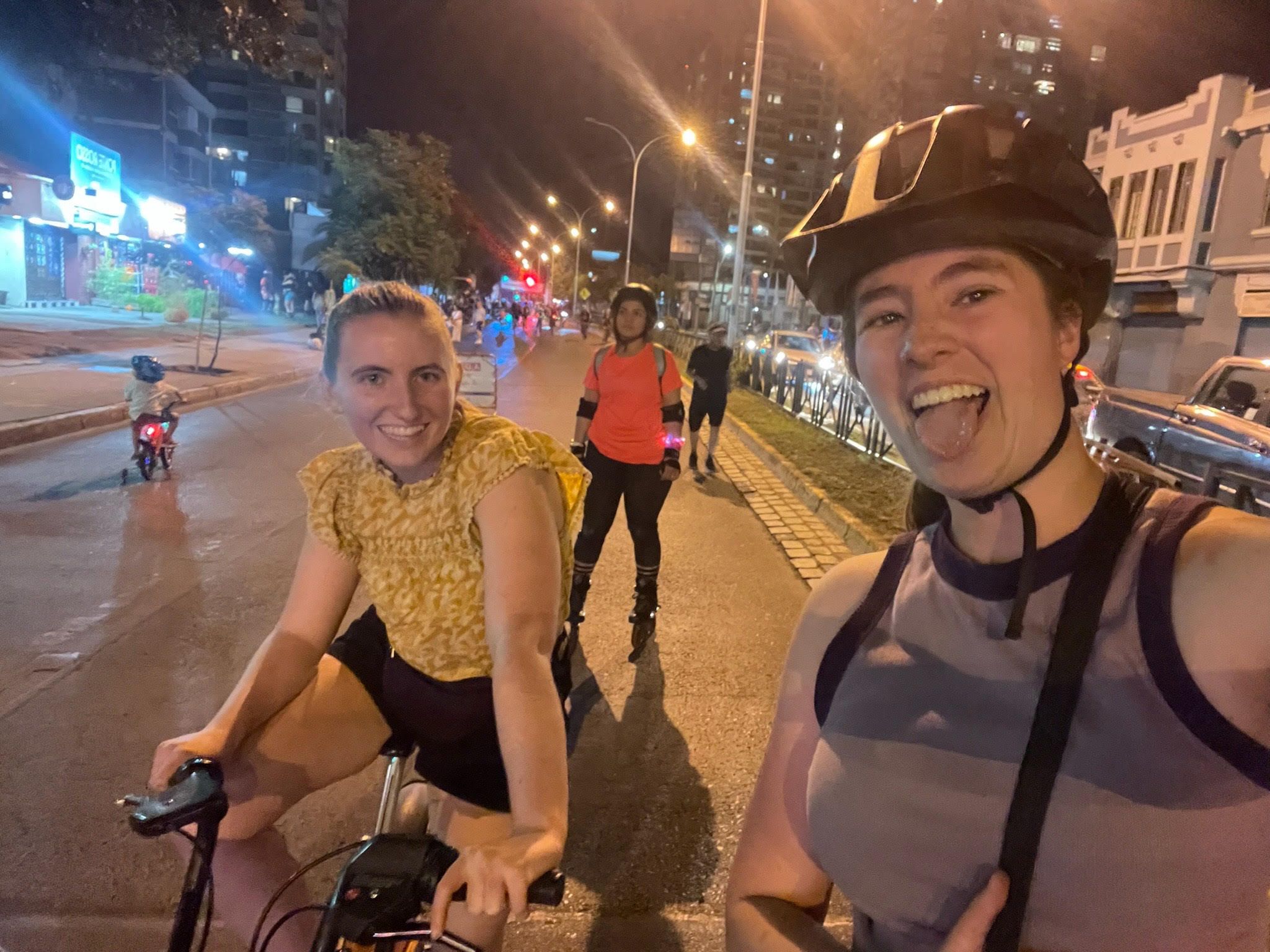
I also got to participate in a night ride, which had the same set up of street closures but everyone was lit up with lights, there were concerts in parks along the route, and families were out together. I felt like I could safely bike around while also getting to know the community.

Now as to why the US is such an outlier in the world we don’t really know but there are a lot of possible reasons. One is that, as Jennifer Homendy, chair of the National Transportation Safety Board said, “Motor vehicles are first, highways are first, and everything else is an afterthought.” I think for bikers this often manifests itself through a feeling like you are not welcomed or you should not be there often because there is no lane for you.

Other theories deal with the kinds of cars Americans drive: often bigger and automatic. Bigger cars mean slower breaking and that pedestrians are hit at a higher point than the legs. Automatic cars means that drivers don’t have to use two hands whereas a stick shift requires a lot more of a driver’s attention, with less attention required in automatic cars drivers are more likely to become distracted by a phone or messing with the radio. Modern cars are also coming with more technology which means more buttons and screens and dials to distract drivers.

“A livable community is one that provides safe and convenient transportation choices to all citizens, whether it’s by walking, bicycling, transit, or driving.” Around the world and unfortunately increasingly in the US communities are not safe for pedestrians, “Each year, unfortunately, pedestrian and bicyclist fatalities comprise about 19 percent of all traffic fatalities with approximately 6,000 pedestrian deaths and 850 bicyclist deaths. Another 76,000 pedestrians and 47,000 bicyclists are injured in roadway crashes annually.”

For me this is a reminder of why we do the work we do at the National Youth Bike Council. Why we need to take perspective from not just the loudest but also the youngest of all pedestrians, because the problem is getting worse. Even a pandemic which significantly decreased the amount of cars on the road did not decrease pedestrian deaths, which means our infrastructure is falling short.

There are many theories why pedestrian deaths are increasing but there are also many ways we can try and change that. From a personal level this can look like reaching out to your local government about places where you see gaps in pedestrian infrastructure. At a community level we can look at Santiago, starting out by handing over streets to pedestrians once a week. At a national level you can join our volunteers or volunteer for organizations like Vision Zero where we either give resources or help organize initiatives that teach a specific set of pedestrians how to avoid common mistakes drivers make. We work to change the fact that the US is an outlier in the world of pedestrian fatalities. So as Bike Month is coming up I hope we can take some time to learn about the problem (or problems)and the solutions. See you next month!

If you want to learn more about how lower income communities are disproportionately affected check out Smart Growth America. Or additional resources.

For more theories including people moving to the Sun Belt check out the Daily Podcast from the New York Times.
49 States and 500+ Miles Later

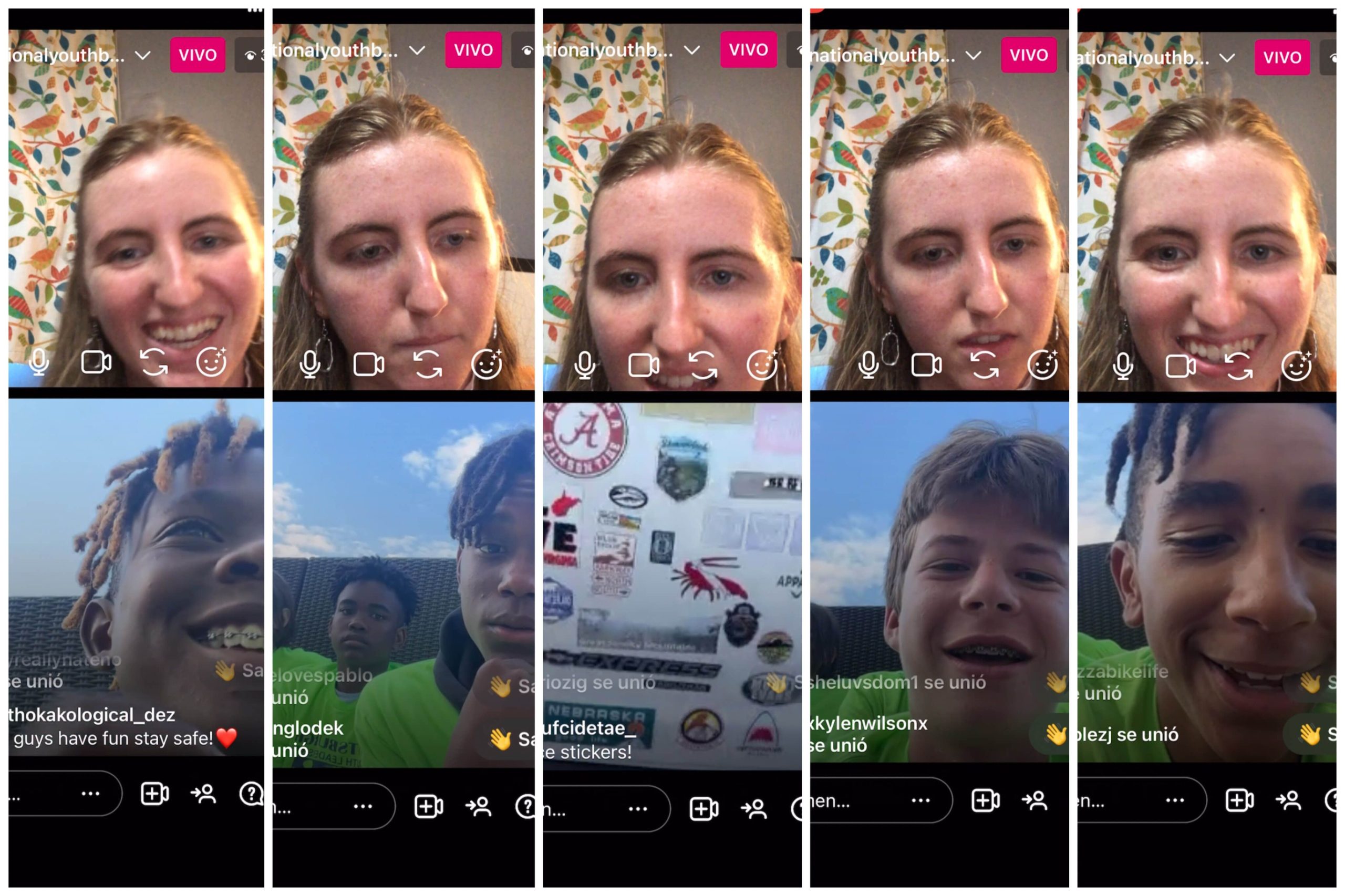
Happy June, I hope you are doing well and keeping cool during a hot summer! With Pride Month and the latest federal holiday, Juneteenth, June offers a time to celebrate and reflect on diversity within our communities. As we have discussed in previous blogs, biking has been historically dominated by white male bikers but there are organizations pushing to make biking more inclusive to all communities. Many of them, like NYBC, are youth-fueled. I had the opportunity to talk with one of those organizations, Pittsburgh Youth Leadership (PYL). Specifically, I talked to 8 riders who were currently on a 500-mile trip from Queensbury, NY to the Basketball Hall of Fame in Massachusetts. Almost all of them were young, black, and from lower economic means and were not attempting long-distance bike trips before PYL. Yet, they had just finished their 6th day and had already done around 220 miles.

PYL is a nonprofit organization that gives inner-city, low-income, at-risk youth access to biking through all-expenses-paid bike rides across the country – we’re talking about hundreds of miles. They have also been to 49 states, with Hawaii being the exception and they have proof. John Harris (this was his 4th trip with PYL) showed me the “home base” van that has a bumper sticker from every place PYL riders have been. So how did they do it?

Author: Council Member Nora

Morrell Rogers (2nd trip) described the intense training they do to learn bike safety techniques, how to pass correctly, change gears, and get a taste of long-distance riding. Usually, they are around 40 miles. Caleb Freich (5th trip) says that PYL definitely helps him get and stay in shape with Caiy Whim (1st trip) adding that the training rides increase your strength, endurance, and stamina by forcing everyone to face and surpass their limits.

Anthony “AJ” Evans (1st trip) heard about PYL from a school friend and, when he became old enough, was recommended by his school to join, all riders must maintain a 2.0 GPA. He and all the other riders said that what the PYL teaches you is not just physical ability but mental strength. As AJ put it, “You always find a way to push through, you have to persevere,” because once you get started you can’t turn around. Cenire Scott agreed, through PYL he learned that biking is a lot harder than you think, you can easily burn out if you haven’t trained hard enough, but he now knows how to persevere through the burn.

Landon Pickett (1st trip) told me that they ride on both trails and next to roads, rain or shine. Unfortunately this trip there was some rain on rocky terrain, making it the hardest day so far. Everyone seemed to doubt whether they or their bikes would make it through, but as Morrell told me thanks to the perseverance they have built up they were able to pass through.

This is just one of many trips that PYL offers this year with most riders planning to go on as many trips as possible. PYL really stands out to me because of how it is able to transform the idea of biking and include more people in the biking community. One thing they left me with was that you only need to go on one ride to totally reframe your mindset not just in terms of biking but in what your limits are and how you can surpass them.

As I learned from Morrell, Caiy, Caleb, AJ, Moneaz, Landon, Cenire, and John biking introduces you to a community that not only strengthens your physical health but also your respect for yourself and the world around you. I want to shout out PYL this month for doing so much to bring the world of biking to more people and to the PYL riders for persevering through! Good luck with the rest of your rides!

This has not been the only time we have spoken with young people from PYL, Joshua, another Council member, had the chance to bring Desmond, another PYL rider, on a Council Chatcast. Once again, during that conversation, Desmond mentions how being included has changed his life as he has traveled with PYL and experienced things through a new lens on a bicycle and over tons of miles!

The longest trip I have ever done was 250 miles and I cannot imagine doing any more than that. What about you Brian? What is the longest bike ride you have done? How does riding backward change the experience? How do you think we can get more people on bikes?

If you want to find out more about PYL check out their website here, if you are with an organization like PYL, consider hopping into the YB Hub!

The Council In DC

Author: Council Member Nora

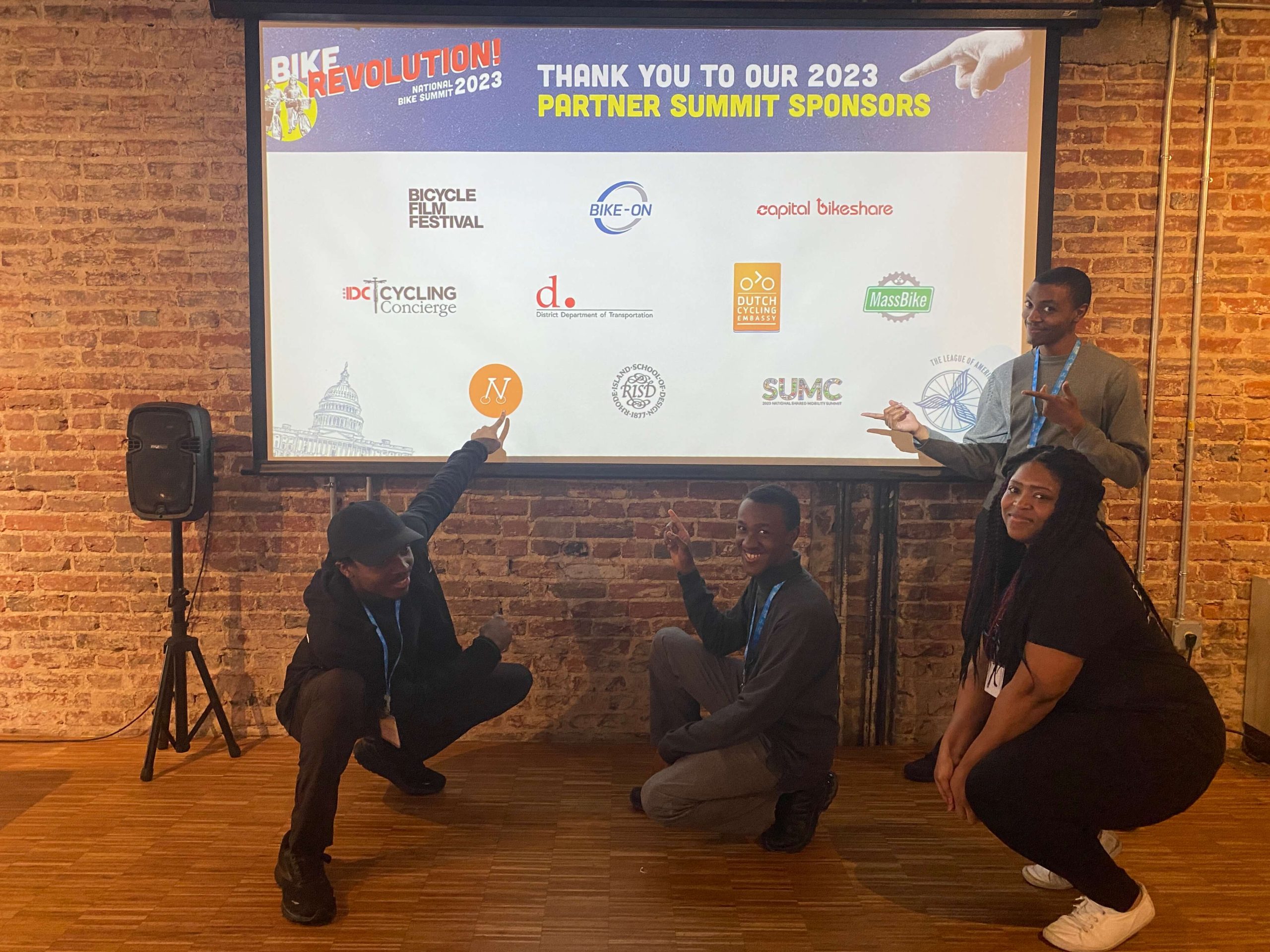
We are live and we are national. That is right, we just got back from the 2023 National Bike Summit in Washington, D.C. during peak cherry blossom season: March 26th-29th. Lot, Joshua, Job, and I met up to give a presentation on where the Youth voice fits into the world of biking. But before I get into that, hi! My name is Nora, one of the newest members on the Council, and I along with the other council newbie–Backwards Brian–will be bringing you blogs every month to discuss Council activities, the world of biking, and more! Brian will be making incredible and fun videos below that will go over what I am writing about but with his own style, which–trust me–gives you a new perspective, that’s what riding backward does.

So nice to meet you, now this is the 23rd National Bike Summit and it is an event where all kinds of commuters meet from around the country to ride, network, and discuss the future of biking. One presentation by Outride focused on the brain and how biking impacts its level of performance in beneficial ways. We even got to see it with a VR headset and a bicycle setup!

One of my favorite presentations was a panel discussion on “Creating Safe Streets for Women” in which the Honorable Jennifer Homendy, Chair of the National Transportation Safety Board, opened up the talk by delving into how biking can be both an empowering and dangerous activity for women, so how do we make it just empowering? Biking serves as a car-free option for women to choose from outside of public transportation–where many women face negative experiences–but more work needs to be done to make public spaces safer for women and all pedestrians who use these public spaces to travel. I particularly enjoyed hearing from Tanisha Sepulveda who is a wheelchair user working to create a cohesive and usable infrastructure for wheelchair users in Seattle, Washington. Tanisha worked to bring attention to the inadequacies of Seattle’s infrastructure by challenging state lawmakers to spend a week free of a car, some weren’t even able to go without a week.

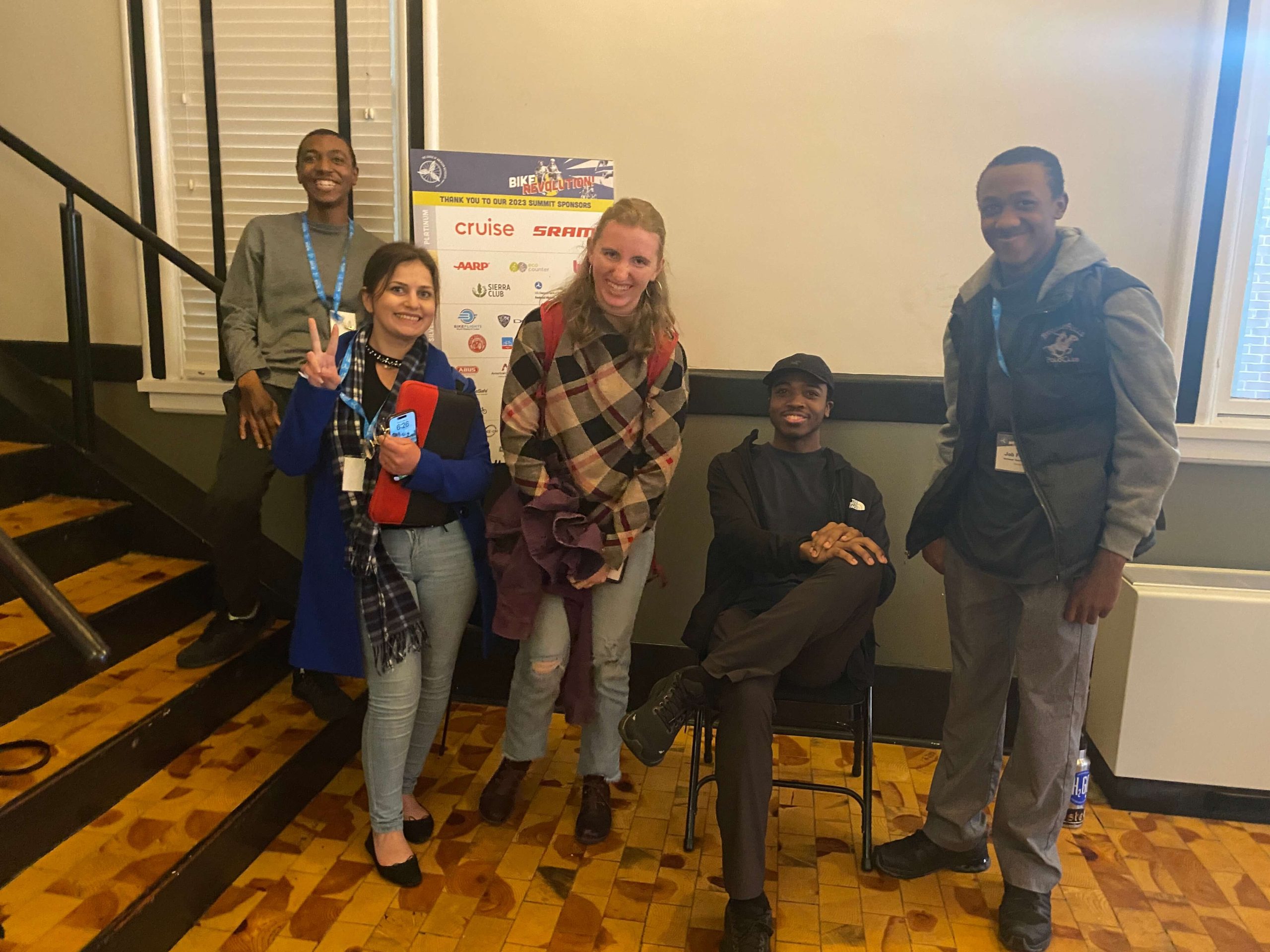
One of the biggest surprises for Lot, Job, and Joshua was running into Yasmine, another youth road-safety advocate. Yasmine was surprised to meet them on one day of the Summit. The shock was so great, it gave us a new friend from Miami and we ended up hanging out all day during the Summit in different presentations.

left-to-right (Joshua, Yasmine, Nora, Lot, Job)

Joshua, Lot, and Job headed to the Capitol on Wednesday to meet with their representatives and discuss infrastructure needs for the biking community. The three Pennsylvanians chatted it up with staffers from Representative Madeline Dean; Senators John Fetterman and Robert P. Casey Jr. Then they got asked to lobby other Senators because they were doing so well, woohoo! The organizers obviously realized the power of giving the youth a voice. Young people are also out there making change and we got to tell legislatures about that change and what the Council was up to!