5 Steps Leaders Are Taking To Enhance Youth Voice

Without hesitation, the five points shared below should be extended beyond young people’s physical capabilities or academic performance. It challenges the notion that young people’s opinions are not worth consideration and that inclusivity along with many other benefits are lost when not properly engaging youth voices.

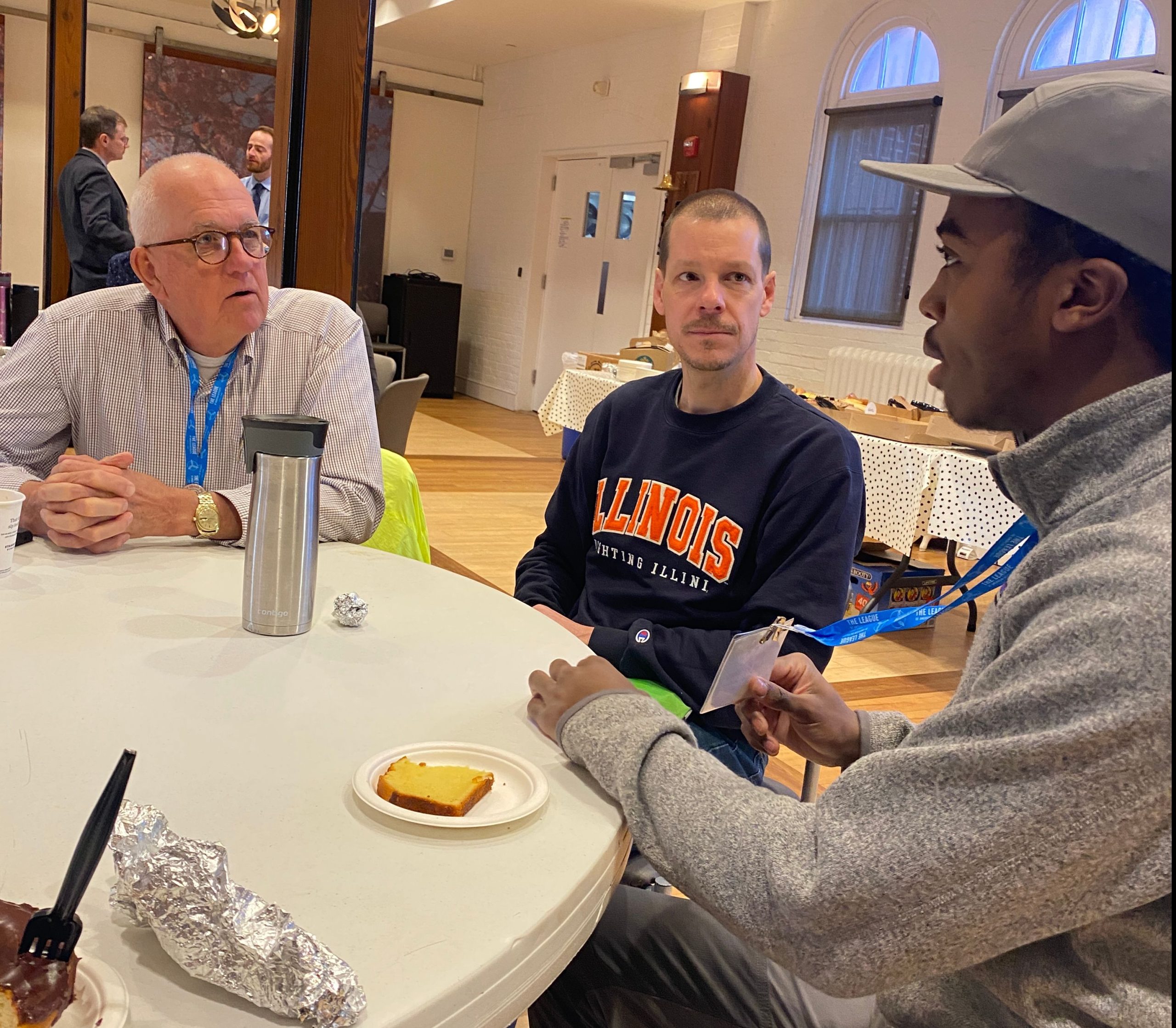
Recently, mayors and their staff were joined by Joshua from the National Youth Bike Council, Jacob Smith from National Organization for Youth Safety, Alison Collard de Beaufort with Vision Zero Youth Council, and Grace & Javier, both in 8th grade from the FCCLA to talk about several ways in which different initiatives across the US create meaningful engagement for young people.

These leaders took out some time to challenge their status quo and to learn a new perspective from young transportation advocates. What this teaches beyond transportation advocacy is that motivated young adults, when given the space and place to speak, will take it.

This event, hosted by the National League of Cities, enabled them to create an article called “Five Ways to Engage Youth in Road Safety Initiatives”, where the five ways derived from directly engaging young people. It’s fantastic to see articles created from this method of engagement, making an example of what working towards a more inclusive and collaborative future looks like.

Conversations that are yet to be had can start with these five points and serve as a great first step to uplifting the next generation. The points are as follows:

  1. Meet with your local youth elected officials and organizations
  2. Bring youth voices into Vision Zero and road safety initiatives
  3. Host a day of youth and community education and action
  4. Work with your local hospital to understand how many young people are involved in vehicle-related accidents in your community and find your high injury network (HIN)
  5. Conduct a road safety audit near the schools in your city

Even though all of these do require their own episode, we will focus on the one that is the lowest hanging fruit. That is point number one, being the least local leaders and transportation members can help achieve. Here is a snippet from point number one, “meet with your local youth elected officials and organizations. Many municipalities have youth seats on their city council, committees and boards. Also seek out chapters of youth-led organizations like the National Organization for Youth Safety, the National Youth Bike Council, the Vision Zero Youth Council and FCCLA. Many middle and high schools have divisions of the National Honor Society, a volunteer organization of students dedicated to giving back.”

Simply put, if young people did not want to speak, they would not speak, but here we are speaking up. Additionally, including young people’s novel opinions, their capacity for driving change, and unique ways of thinking naturally fosters policies that create a more equitable and inclusive world for all ages.

This point was brought up by multiple groups during the conversation and is a note we gladly harper on as a basis for our youth leadership. We have to be willing to try and fail. Rather than to worry about our fear of not knowing, we’ll figure it out. It should not be uncommon for city leaders to ask or be asked about ways in which they are supporting the next generation by amplifying their voices and ensuring their active participation in decision-making.

As the lowest hanging fruit in the path to progress, engaging with local youth leaders and organizations can be a significant step towards building more inclusive and equitable communities. Unlike it may seem, even this step reaps great rewards and strengthens social fabrics by example and youth participation.

Here is a link to the full article. If you would like to support the creation of more articles like this, follow us to support our work.
49 States and 500+ Miles Later

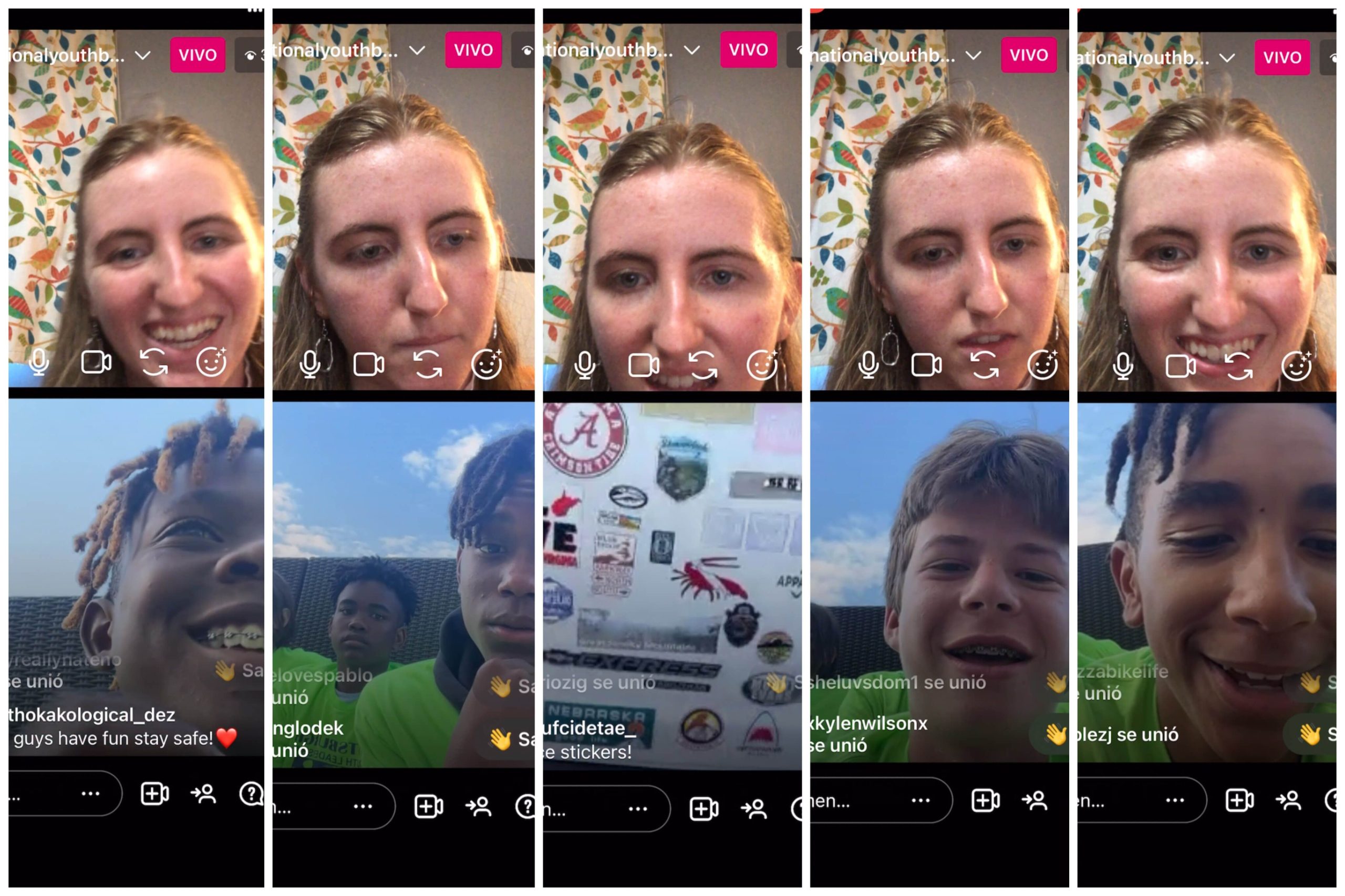
Happy June, I hope you are doing well and keeping cool during a hot summer! With Pride Month and the latest federal holiday, Juneteenth, June offers a time to celebrate and reflect on diversity within our communities. As we have discussed in previous blogs, biking has been historically dominated by white male bikers but there are organizations pushing to make biking more inclusive to all communities. Many of them, like NYBC, are youth-fueled. I had the opportunity to talk with one of those organizations, Pittsburgh Youth Leadership (PYL). Specifically, I talked to 8 riders who were currently on a 500-mile trip from Queensbury, NY to the Basketball Hall of Fame in Massachusetts. Almost all of them were young, black, and from lower economic means and were not attempting long-distance bike trips before PYL. Yet, they had just finished their 6th day and had already done around 220 miles.

PYL is a nonprofit organization that gives inner-city, low-income, at-risk youth access to biking through all-expenses-paid bike rides across the country – we’re talking about hundreds of miles. They have also been to 49 states, with Hawaii being the exception and they have proof. John Harris (this was his 4th trip with PYL) showed me the “home base” van that has a bumper sticker from every place PYL riders have been. So how did they do it?

Author: Council Member Nora

Morrell Rogers (2nd trip) described the intense training they do to learn bike safety techniques, how to pass correctly, change gears, and get a taste of long-distance riding. Usually, they are around 40 miles. Caleb Freich (5th trip) says that PYL definitely helps him get and stay in shape with Caiy Whim (1st trip) adding that the training rides increase your strength, endurance, and stamina by forcing everyone to face and surpass their limits.

Anthony “AJ” Evans (1st trip) heard about PYL from a school friend and, when he became old enough, was recommended by his school to join, all riders must maintain a 2.0 GPA. He and all the other riders said that what the PYL teaches you is not just physical ability but mental strength. As AJ put it, “You always find a way to push through, you have to persevere,” because once you get started you can’t turn around. Cenire Scott agreed, through PYL he learned that biking is a lot harder than you think, you can easily burn out if you haven’t trained hard enough, but he now knows how to persevere through the burn.

Landon Pickett (1st trip) told me that they ride on both trails and next to roads, rain or shine. Unfortunately this trip there was some rain on rocky terrain, making it the hardest day so far. Everyone seemed to doubt whether they or their bikes would make it through, but as Morrell told me thanks to the perseverance they have built up they were able to pass through.

This is just one of many trips that PYL offers this year with most riders planning to go on as many trips as possible. PYL really stands out to me because of how it is able to transform the idea of biking and include more people in the biking community. One thing they left me with was that you only need to go on one ride to totally reframe your mindset not just in terms of biking but in what your limits are and how you can surpass them.

As I learned from Morrell, Caiy, Caleb, AJ, Moneaz, Landon, Cenire, and John biking introduces you to a community that not only strengthens your physical health but also your respect for yourself and the world around you. I want to shout out PYL this month for doing so much to bring the world of biking to more people and to the PYL riders for persevering through! Good luck with the rest of your rides!

This has not been the only time we have spoken with young people from PYL, Joshua, another Council member, had the chance to bring Desmond, another PYL rider, on a Council Chatcast. Once again, during that conversation, Desmond mentions how being included has changed his life as he has traveled with PYL and experienced things through a new lens on a bicycle and over tons of miles!

The longest trip I have ever done was 250 miles and I cannot imagine doing any more than that. What about you Brian? What is the longest bike ride you have done? How does riding backward change the experience? How do you think we can get more people on bikes?

If you want to find out more about PYL check out their website here, if you are with an organization like PYL, consider hopping into the YB Hub!

Expand Your Mind With Bikeshare

Author: Council Member Nora

Aloha May! It’s your favorite council member blogger, Nora, and it is finally getting consistently warm and sunny here in Washington D.C. This makes May one of my favorite months because it’s perfect weather for National Bike Month. There is nothing better than a sunny day with a bike-fueled breeze to cool you off. National Bike Month was started in 1956 by the League of American Bicyclists to promote bicycling around the nation, with a Bike to Work/School Week (May 15-21) and Bike to Work/School Day on May 19th.

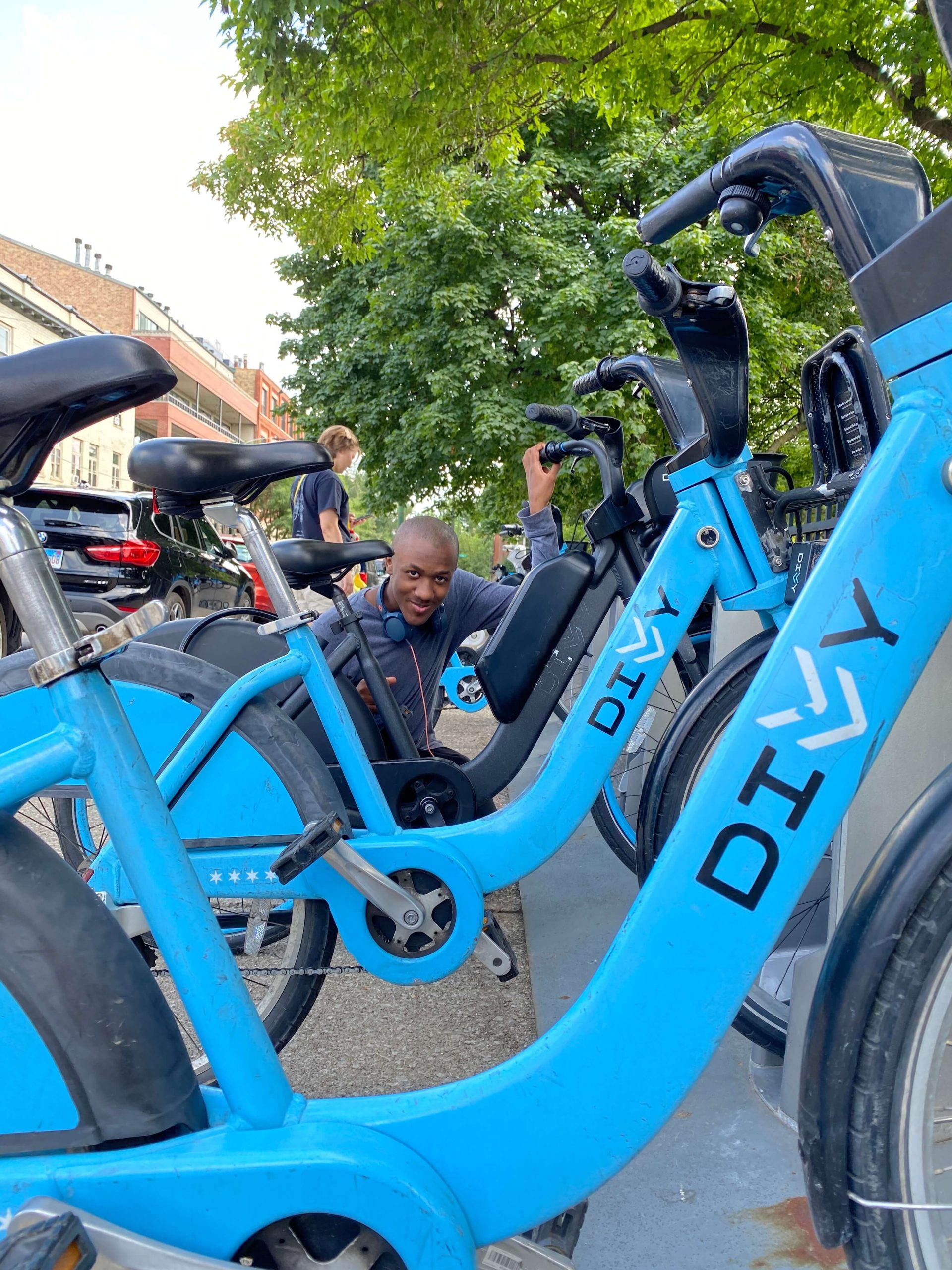
Even if you don’t own a bike, there are still many ways to participate, such as through bike share programs. Bike share is a system that allows people to access bikes in stations across the city through either single-time payment or with memberships – you can get to a local bike share station by train!

Washington D.C. became the first place in the US to implement a bike share known as SmartDC in 2008, which is now known as Capital Bikeshare. Now, all 50 states have followed suit. Capital Bikeshare is a station-based system where you can pick up and lock up your bike after your trip. However, there are bike share programs that don’t have these docking stations that you may have seen, including JUMP and Lime e-bikes. There are also hybrid systems that allow users to pick up at a station and lock bikes somewhere else combining both reliability and flexibility, such as Divvy Bikes, Blue Bikes in New Orleans, and BIKETOWN in Portland.

Bike share programs aren’t just good to get you where you need to go in a cheaper, sustainable, and time-saving manner, but they also help reduce air pollution making your community healthier. So definitely check out a bike share program if you come across one this month or whenever because biking can be and should be enjoyed all the time! Brian, do you know of any bike share programs? How are you celebrating National Bike Month?

If you want to learn more about your state’s bike share programs, click here.

The Council In DC

Author: Council Member Nora

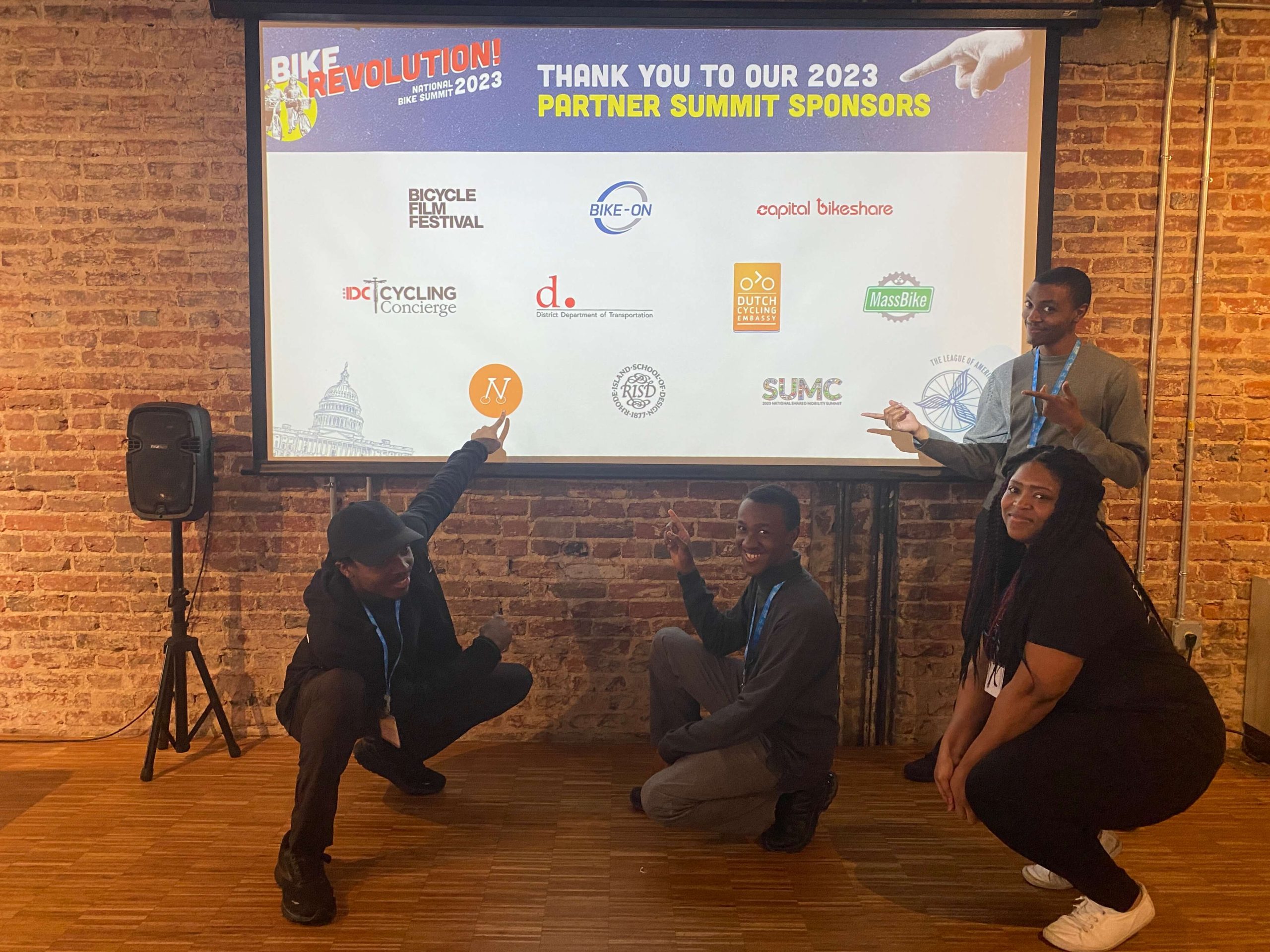
We are live and we are national. That is right, we just got back from the 2023 National Bike Summit in Washington, D.C. during peak cherry blossom season: March 26th-29th. Lot, Joshua, Job, and I met up to give a presentation on where the Youth voice fits into the world of biking. But before I get into that, hi! My name is Nora, one of the newest members on the Council, and I along with the other council newbie–Backwards Brian–will be bringing you blogs every month to discuss Council activities, the world of biking, and more! Brian will be making incredible and fun videos below that will go over what I am writing about but with his own style, which–trust me–gives you a new perspective, that’s what riding backward does.

So nice to meet you, now this is the 23rd National Bike Summit and it is an event where all kinds of commuters meet from around the country to ride, network, and discuss the future of biking. One presentation by Outride focused on the brain and how biking impacts its level of performance in beneficial ways. We even got to see it with a VR headset and a bicycle setup!

One of my favorite presentations was a panel discussion on “Creating Safe Streets for Women” in which the Honorable Jennifer Homendy, Chair of the National Transportation Safety Board, opened up the talk by delving into how biking can be both an empowering and dangerous activity for women, so how do we make it just empowering? Biking serves as a car-free option for women to choose from outside of public transportation–where many women face negative experiences–but more work needs to be done to make public spaces safer for women and all pedestrians who use these public spaces to travel. I particularly enjoyed hearing from Tanisha Sepulveda who is a wheelchair user working to create a cohesive and usable infrastructure for wheelchair users in Seattle, Washington. Tanisha worked to bring attention to the inadequacies of Seattle’s infrastructure by challenging state lawmakers to spend a week free of a car, some weren’t even able to go without a week.

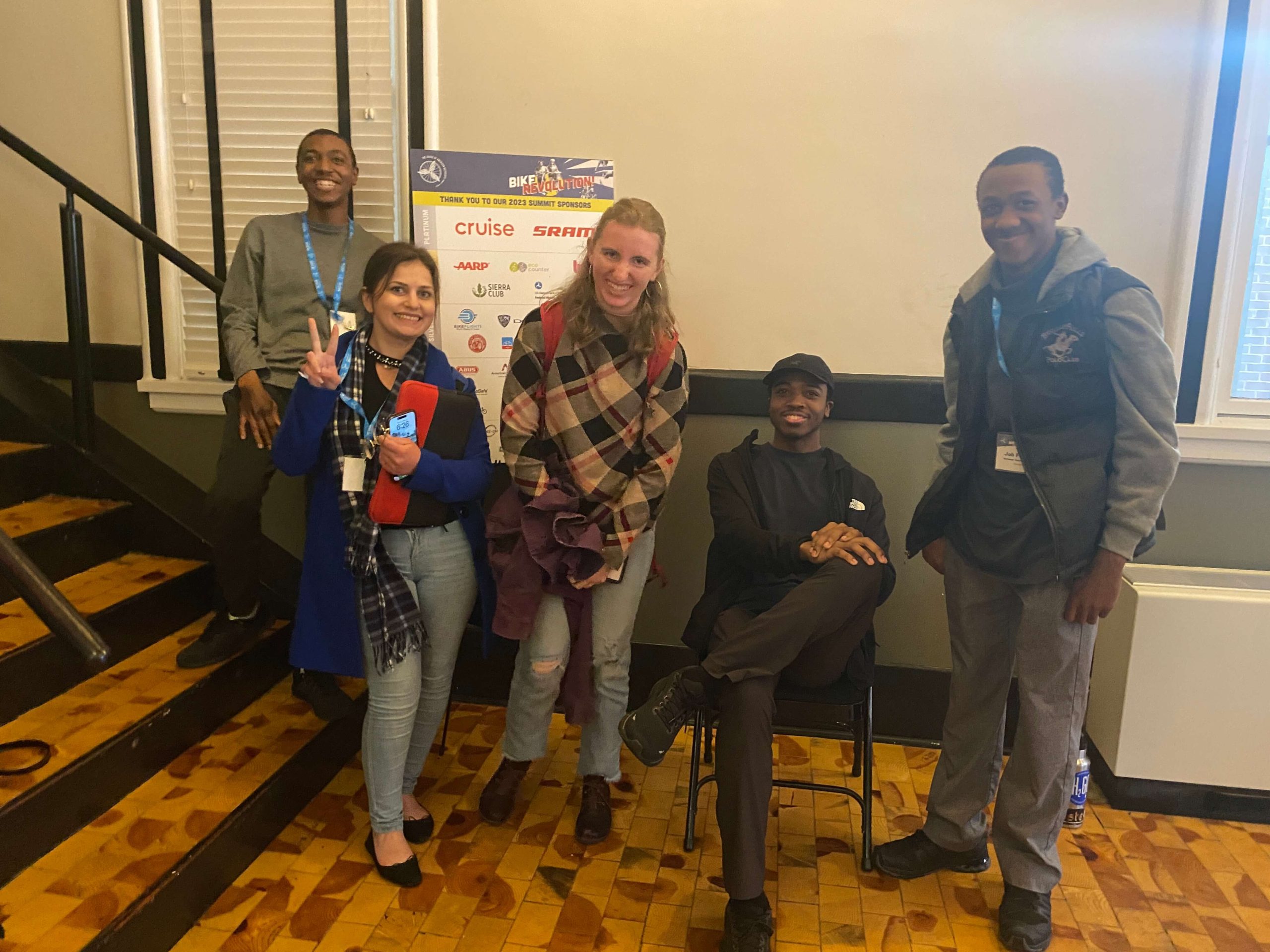
One of the biggest surprises for Lot, Job, and Joshua was running into Yasmine, another youth road-safety advocate. Yasmine was surprised to meet them on one day of the Summit. The shock was so great, it gave us a new friend from Miami and we ended up hanging out all day during the Summit in different presentations.

left-to-right (Joshua, Yasmine, Nora, Lot, Job)

Joshua, Lot, and Job headed to the Capitol on Wednesday to meet with their representatives and discuss infrastructure needs for the biking community. The three Pennsylvanians chatted it up with staffers from Representative Madeline Dean; Senators John Fetterman and Robert P. Casey Jr. Then they got asked to lobby other Senators because they were doing so well, woohoo! The organizers obviously realized the power of giving the youth a voice. Young people are also out there making change and we got to tell legislatures about that change and what the Council was up to!